

Best Artificial Plants for Small Entryways and Corners
Small entryways and unused corners can be tricky to decorate. Leave them empty and the room may feel unfinished; add too much, and the space can quickly feel crowded.
That is why artificial plants for small spaces work so well. They add height, texture, and greenery without taking up the visual space of extra furniture.
The key is choosing the right shape. In compact areas, a slim, upright plant often works better than a short tree with wide, spreading branches.
Start With Shape, Not Height
When choosing an artificial plant for a narrow entryway or corner, width usually matters more than height.
A slim artificial tree can use vertical space while keeping the floor area open. This makes it easier to place beside a console table, sofa, cabinet, or wall without blocking the walkway.
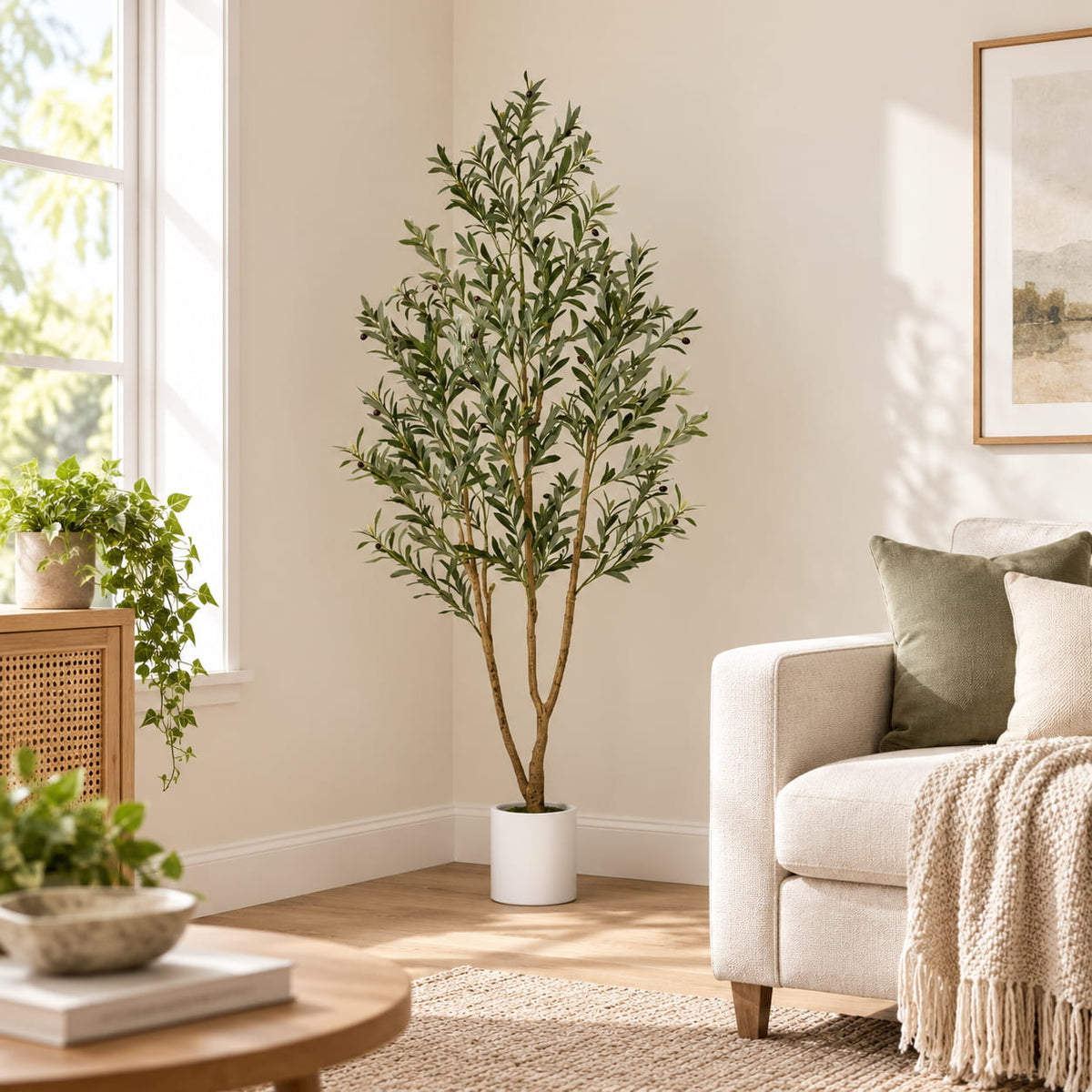
Vitalismo’s Wall-Friendly Artificial Olive Tree is a good example. Its slimmer profile and front-facing foliage are designed to sit closer to walls, making it especially suitable for tight corners and narrow layouts.
For small spaces, this kind of vertical silhouette is often more practical than a full, rounded canopy.
Best Artificial Plants for Small Entryways
Entryways need to stay functional, so the plant should add interest without getting in the way.
A slim artificial olive tree works well beside a console table or mirror, where it can add height without making the entrance feel heavy. Its lighter branch structure also suits neutral, minimalist, and organic-style interiors.
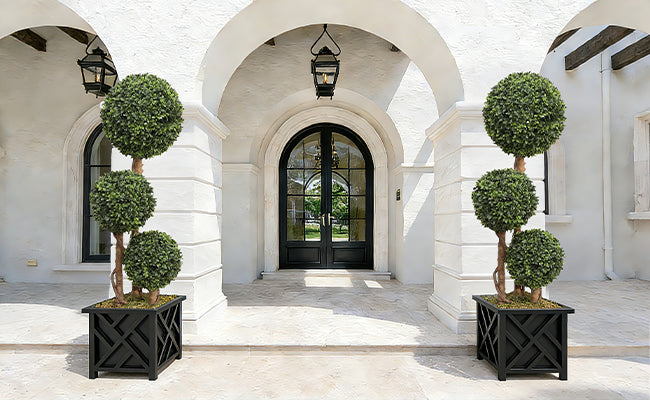
For a more structured look, a cedar topiary is another strong option.
Vitalismo’s Artificial Classic Topiary Cedar Tree comes in several heights and has a tapered shape that fits naturally beside doors, benches, or storage cabinets. The narrow silhouette helps frame the entrance while keeping the walkway clear.
If your entryway is very compact, focus on one plant rather than several small decorative pieces. One well-proportioned tree often creates a cleaner result.

Best Artificial Plants for Empty Corners
Corners usually offer a little more flexibility.
A taller artificial tree for corner styling can help balance an empty area beside a sofa, accent chair, or console. Olive trees work particularly well because their open foliage adds softness without visually filling the entire corner.
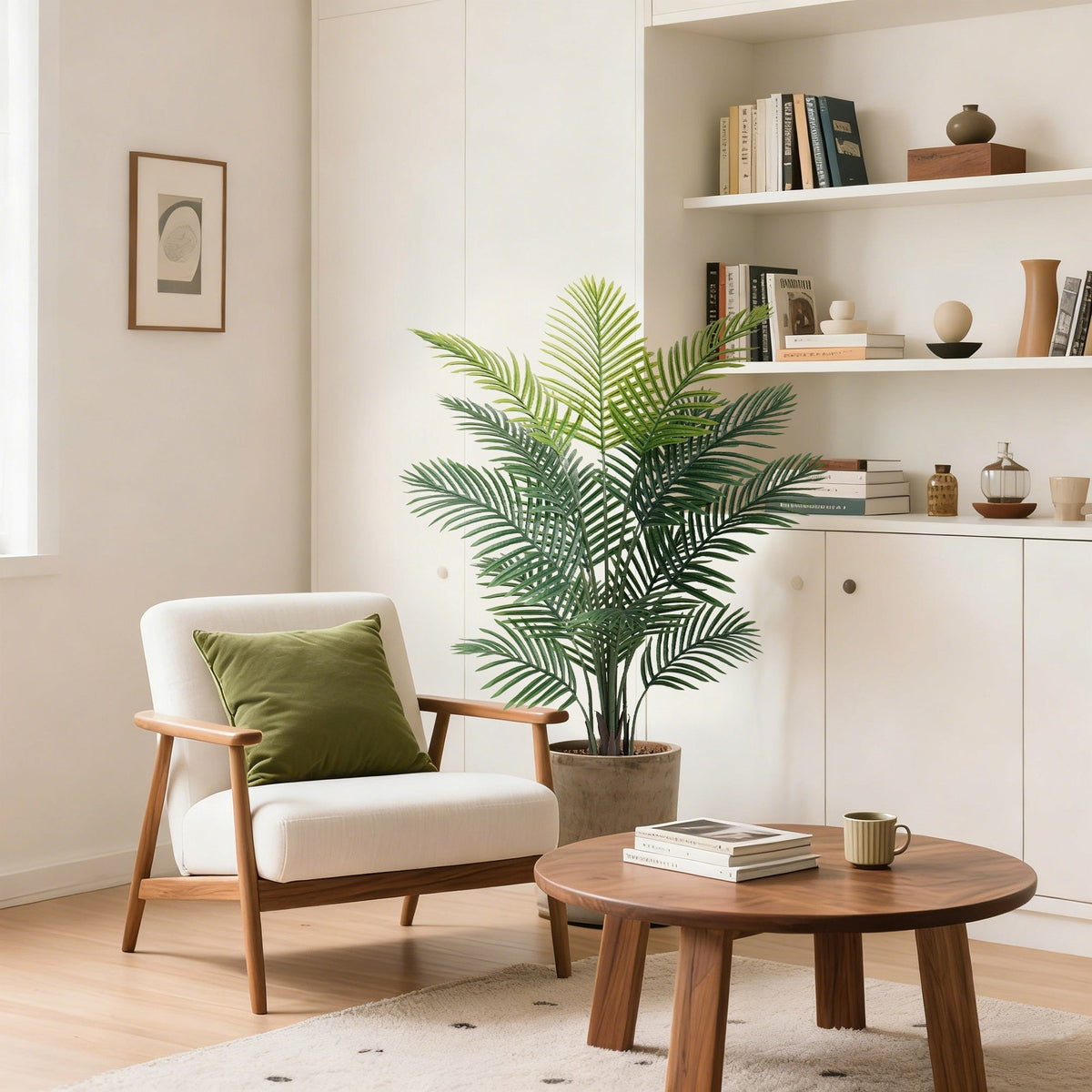
Where there is a little more room, an artificial palm can create a more relaxed look. Its curved leaves add movement and contrast with straight furniture lines.
The goal is not to fill every inch of the corner. Leave enough space around the foliage so the plant feels intentional rather than squeezed between furniture.

Choose the Right Plant for the Space
A simple way to decide is to match the plant shape to the room.
For a narrow entryway, choose a slim olive tree or tapered cedar.
For a tight corner, look for an upright artificial tree with limited branch spread.
For a slightly wider corner, a compact palm can add softness and movement.
For spaces beside a console or sofa, choose a plant that adds vertical height without extending too far into the room.
This approach is often more useful than choosing by height alone.
Tall Plants Can Work in Small Rooms
Small rooms do not always need small plants.
A 6-foot tree with a narrow silhouette may take up less usable space than a shorter tree with wide branches.
Before choosing a plant, check:
-
available floor width
-
distance from nearby furniture
-
door and walkway clearance
-
ceiling height
A little negative space around the plant also helps the room feel more open.
Keep the Styling Simple
Small spaces usually benefit from fewer, more intentional pieces.
Instead of surrounding the plant with several baskets, stools, and accessories, start with the tree itself and a decorative planter.
A ceramic, stone-look, or woven planter can help the plant feel more connected to the room.
After unpacking, gently reshape the branches and leaves rather than keeping them perfectly symmetrical. Small variations in direction can make realistic artificial plants feel much more natural.
In many cases, a mirror, console, planter, and slim tree are all an entryway needs.
Frequently Asked Questions
What artificial plant is best for a small entryway?
A slim artificial olive tree or tapered cedar topiary is a good choice because both add height without taking up much horizontal space.
Can I use a tall artificial tree in a small corner?
Yes. A tall tree with a narrow canopy can make good use of vertical space while keeping the floor area open.
What size artificial tree should I choose?
Do not focus on height alone. Measure the available width, nearby furniture, and walkway first. In compact spaces, a taller but slimmer tree can often fit better than a shorter, wider one.
Final Thoughts
The best artificial plants for small entryways and corners are not necessarily the smallest ones.
What matters most is proportion.
A slim olive tree can soften a narrow wall or console area. A cedar topiary can create a cleaner, more structured entrance. A compact palm can bring movement to a slightly wider corner.
Choose a plant that works with the shape of the room, keep the surrounding decor simple, and let the greenery become the finishing touch rather than another source of clutter.
Written by Vitalismo Editorial Team
Practical ideas for styling artificial plants and creating natural-looking spaces.

اترك تعليقًا
This site is protected by hCaptcha and the hCaptcha Privacy Policy and Terms of Service apply.