



Artificial Cedar Trees for Cozy Fall and Winter Spaces
As summer fades into cooler days, home decor naturally begins to shift toward warmer textures, deeper tones, and more layered spaces. Fall brings earthy colors and natural materials, while winter introduces evergreen greenery, soft lighting, and a quieter sense of comfort.
An artificial cedar tree fits naturally into this transition. Its evergreen shape works from early fall through winter, making it easy to refresh a space without replacing every decorative element. Whether placed on a front porch, in an entryway, or in a quiet indoor corner, cedar greenery adds structure and seasonal color without feeling overly festive.

A Natural Base for Fall-to-Winter Styling
Seasonal decorating often feels more cohesive when the larger elements stay consistent.
During fall, an artificial cedar tree can be styled with warm wood, woven textures, lanterns, neutral pumpkins, and soft beige or brown fabrics. These details create a seasonal atmosphere while keeping the overall look calm and understated.
As winter approaches, the same tree can remain in place while smaller accents gradually change. Pumpkins and dried foliage can be replaced with pinecones, wool textiles, warm lighting, or a simple evergreen wreath.
The cedar becomes a visual link between the two seasons.
This approach works especially well in homes that favor organic modern, warm minimal, or contemporary interiors, where seasonal changes are created through texture, tone, and lighting rather than heavily themed decor.
Artificial Cedar Trees for Front Porches and Entryways
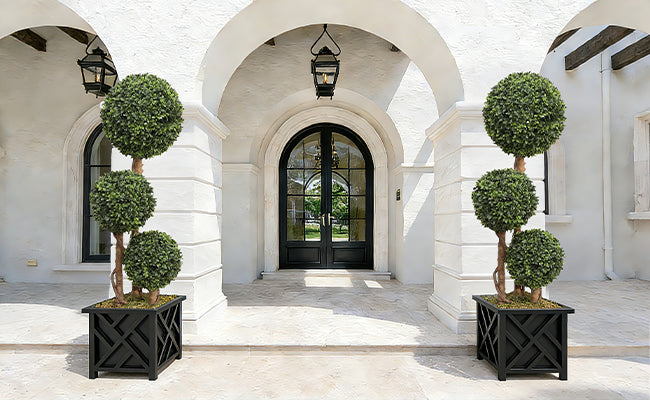
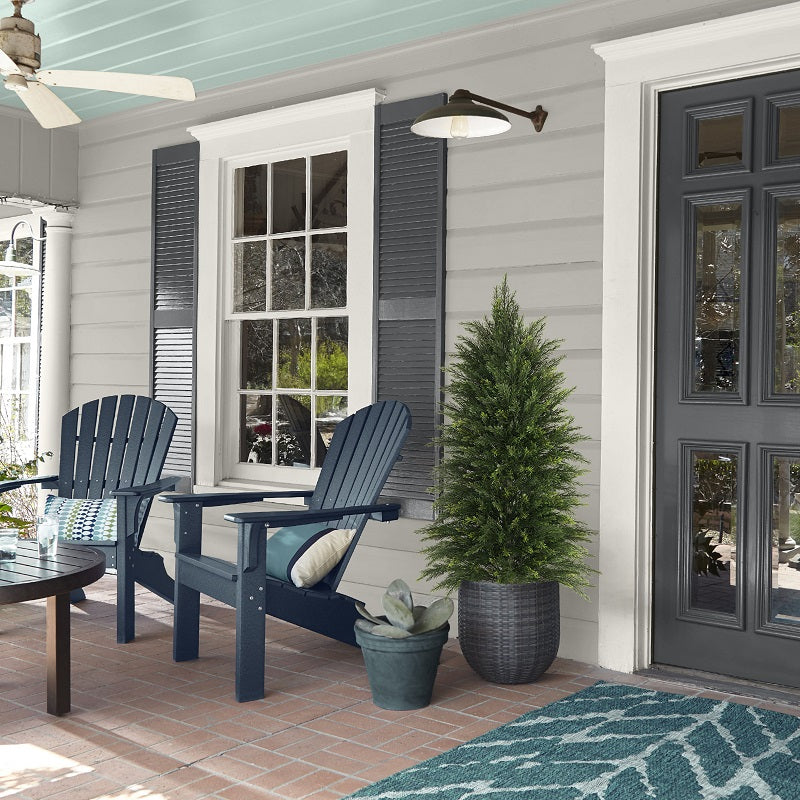
The front entrance is one of the most natural places to use artificial cedar trees for front porch decor.

A pair placed on either side of the front door creates an easy sense of balance. Their upright form frames the entrance while keeping the arrangement clean and structured.
For fall, cedar greenery can be paired with a neutral doormat, black lanterns, warm wood accents, or a few muted pumpkins. Instead of filling the porch with seasonal decorations, keeping the palette restrained allows the greenery to become part of the architecture.
As the weather turns colder, the fall accents can be simplified. A wreath, pinecones, or subtle warm-white lighting can shift the same setup toward winter without completely redesigning the entrance.
For smaller spaces, a single faux cedar tree beside a bench, console, or lantern can be enough to add height and soften an empty corner.
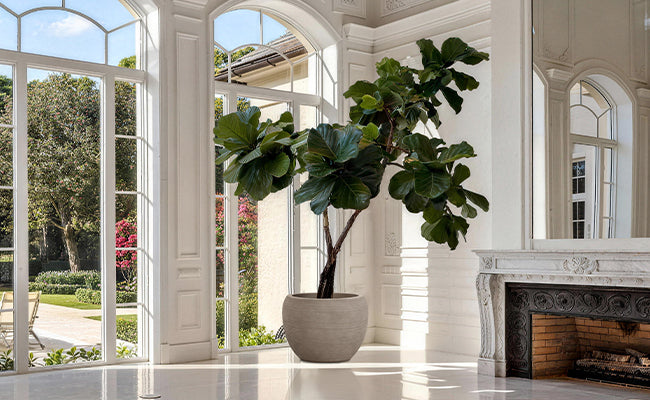
Indoors, cedar trees can also work well in foyers and hallways, especially where living plants may struggle because of limited natural light.
Bringing Evergreen Greenery Indoors
Although cedar trees are often associated with porches, they can work just as naturally inside the home.

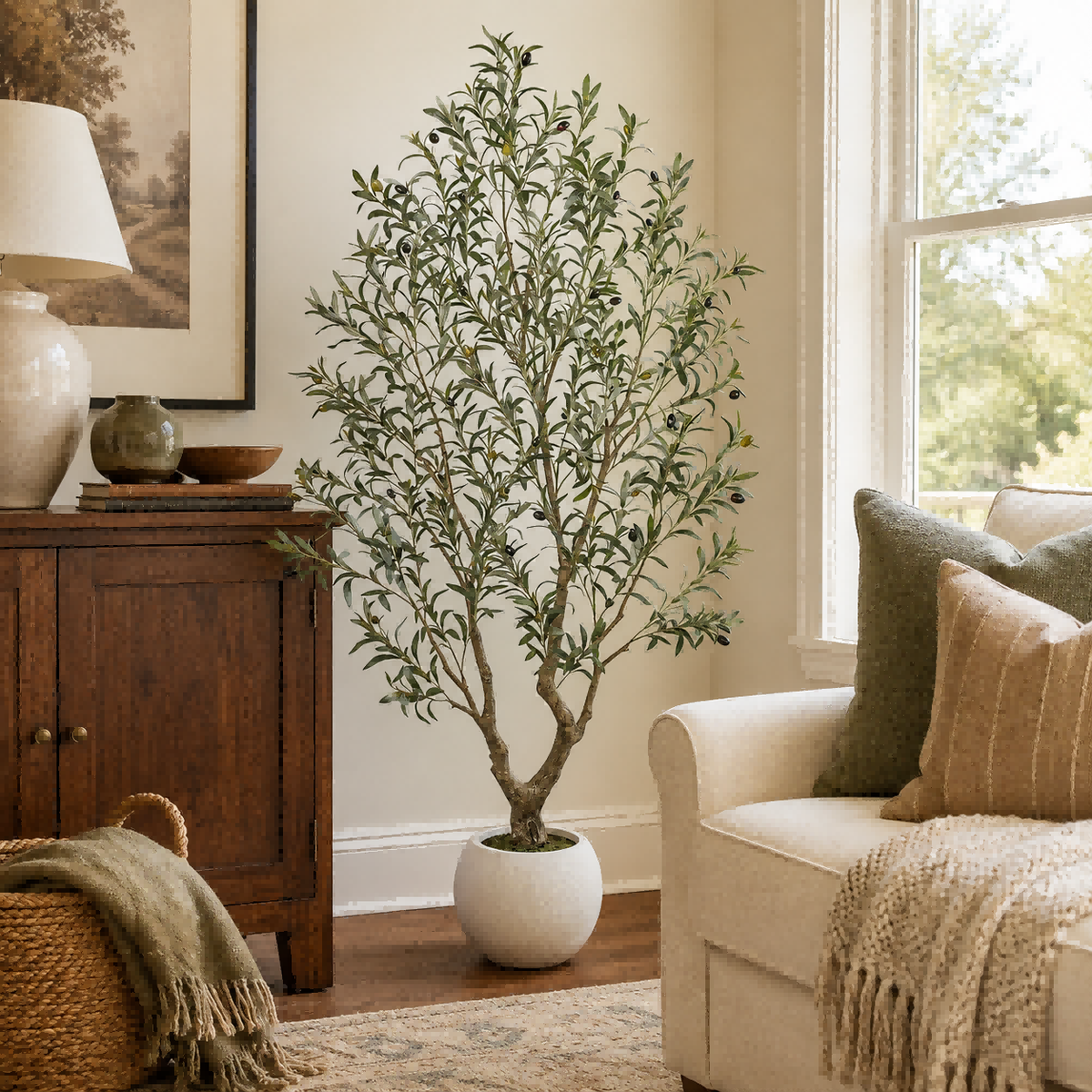
Their narrow, vertical silhouette makes them useful in spaces where a fuller artificial tree may feel too large. A cedar tree can sit beside a fireplace, near a console table, or in an unused living room corner to introduce greenery without overwhelming the space.
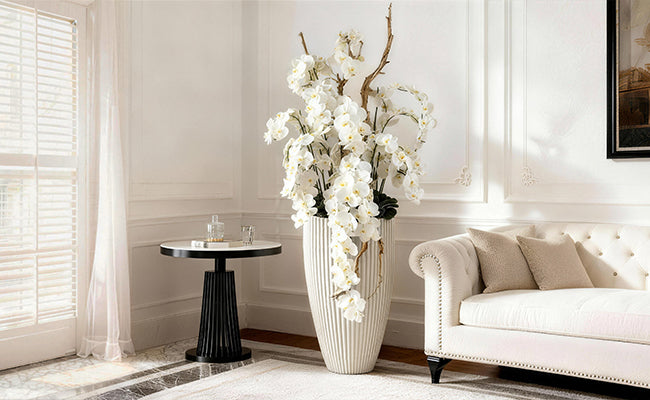
Warm neutral interiors pair especially well with evergreen foliage.
Cream upholstery, walnut furniture, natural wood, stone, wool, and black metal all help create a softer seasonal look. These materials allow the greenery to stand out while keeping the room grounded and comfortable.
Winter styling does not need to rely heavily on traditional holiday colors.
An artificial cedar tree paired with cream textiles, warm lighting, candles, and natural textures can already create a cozy winter atmosphere. During December, subtle lights or a few restrained ornaments can be added temporarily. Once the holidays are over, those details can be removed while the cedar still feels appropriate through the rest of winter.
This makes faux cedar tree indoor decor useful well beyond Christmas.
Choosing the Right Height and Placement
Scale plays an important role in making artificial greenery feel natural.

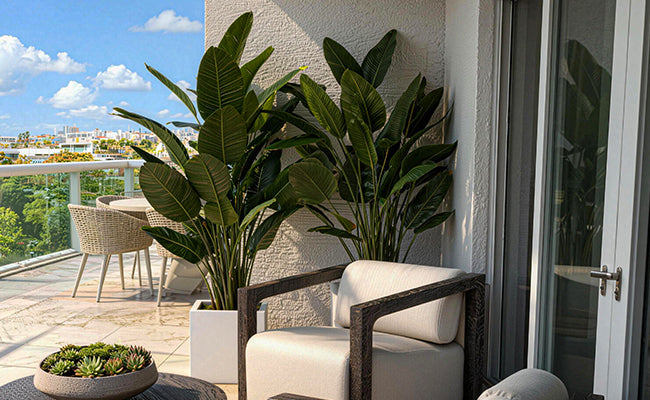
Smaller cedar trees work well near porch steps, apartment entrances, balconies, benches, or compact indoor corners. They add greenery without making the space feel crowded.
Medium-height trees are often the most versatile choice for standard residential doors and entryways. They provide enough visual presence while still fitting comfortably alongside furniture and seasonal accessories.
Taller cedar trees work better in larger porches, spacious foyers, patios, or rooms with higher ceilings.
Instead of choosing the tallest option automatically, consider the proportions of the surrounding space. Door height, nearby furniture, ceiling height, and available floor area all influence how balanced the tree will feel.
Placement matters just as much as size.
For a formal entrance, two matching trees can create symmetry. For a more relaxed look, a single tree placed beside a bench or lantern can feel more natural. On larger porches, combining different heights can add dimension without making the arrangement look overly styled.
Seasonal Greenery That Lasts Beyond the Holidays
The most useful seasonal decor often works for more than one holiday.
An artificial cedar tree can begin as part of a fall porch, move naturally into winter styling, become part of a simple Christmas arrangement, and remain in place after the holidays.
That flexibility makes cedar greenery especially useful for homes that prefer a softer, more understated seasonal look.
Rather than redesigning a room or entrance several times throughout the colder months, the greenery can serve as a consistent foundation. Textiles, lighting, wreaths, and smaller decorative details can evolve around it.
The result is a space that feels warm in fall, cozy in winter, and easy to adapt as the season changes.
About the Author
Vitalismo Editorial Team
The Vitalismo Editorial Team shares practical ideas for styling artificial greenery and creating natural, comfortable spaces throughout the seasons.

Dejar un comentario
Este sitio está protegido por hCaptcha y se aplican la Política de privacidad de hCaptcha y los Términos del servicio.