

Best Artificial Plants for a Home Office
A home office should feel focused, comfortable, and visually balanced. Adding artificial plants for home office spaces is an easy way to soften desks, shelves, and storage furniture without worrying about sunlight, watering, or daily care.
The best choice depends on how much space you have and what the room is missing. A small desk may only need a compact bamboo plant, while an empty corner can handle a taller olive tree, ficus, or palm.
What Makes a Good Artificial Plant for a Home Office?
The best artificial office plants should improve the room without getting in the way of how you work.
Before choosing one, consider:
-
Available desk or floor space
-
Plant height and foliage width
-
Empty corners or unused wall areas
-
Whether you prefer light or fuller greenery
A simple rule is to choose narrow plants for smaller offices and fuller trees for larger spaces.
For most home offices, one floor plant and one smaller accent plant are usually enough.
Best for Small Spaces: Bamboo and Sansevieria
If your office has limited floor space, start with plants that grow visually upward rather than outward.
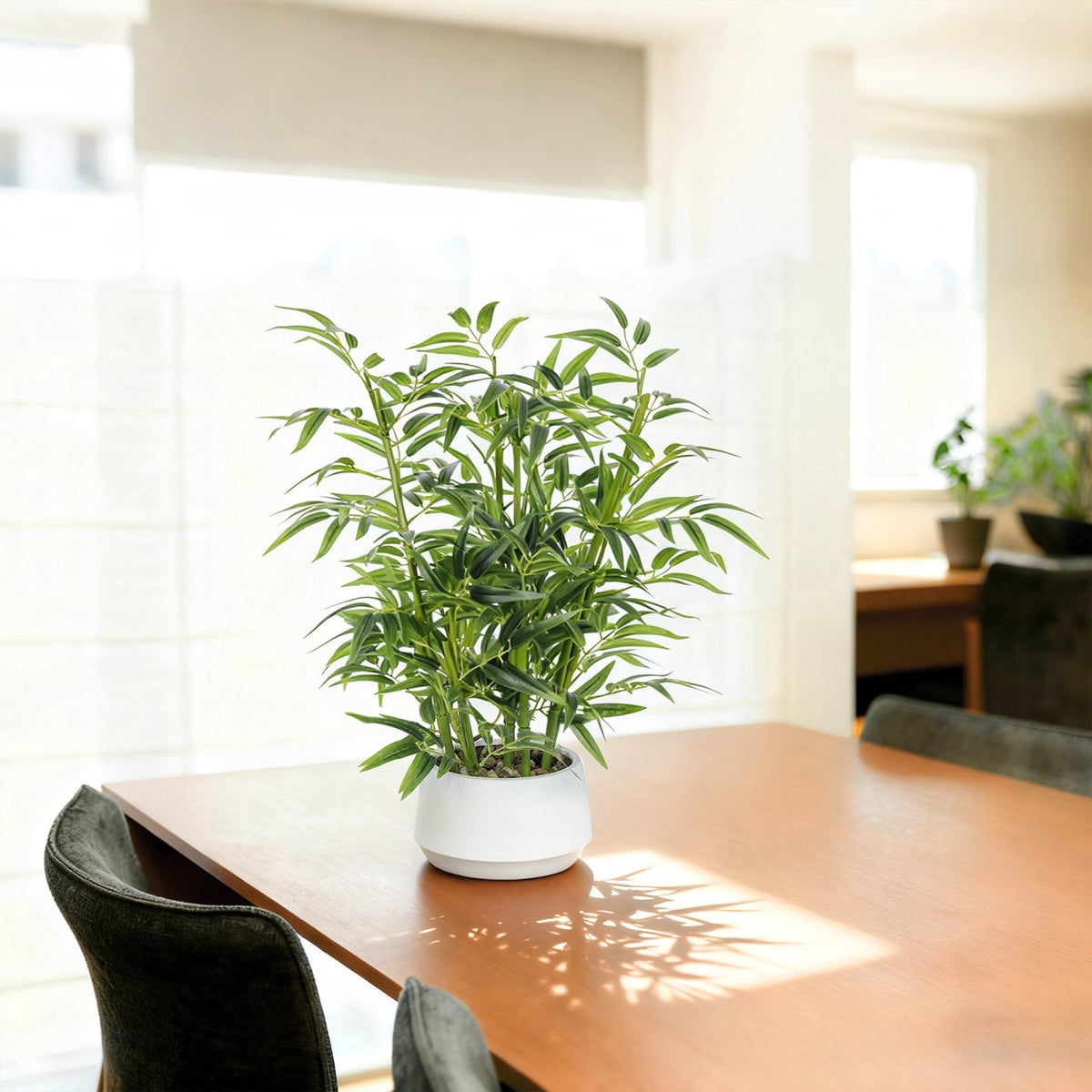
An artificial bamboo plant for office desks works well on shelves, cabinets, or one side of the desk. Its compact shape adds greenery without competing with monitors or work equipment.
Sansevieria is better when you want something on the floor. Its narrow, upright foliage can fit beside a desk, filing cabinet, or in a tight corner.
Both are good small artificial plants for office spaces where keeping the room open and uncluttered matters.

Best for an Empty Office Corner: Olive Tree
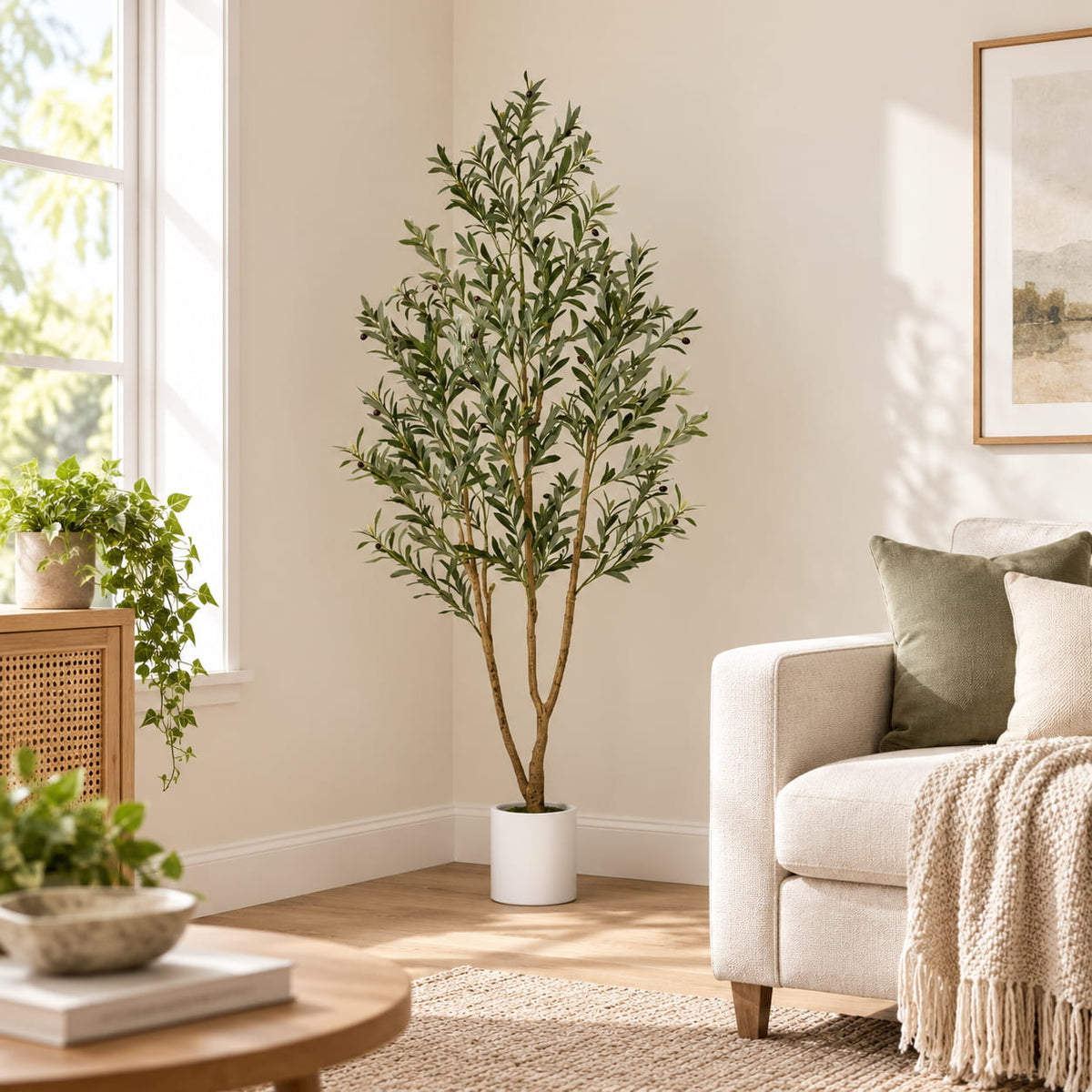
An artificial olive tree for office spaces is a good choice when you want height without heavy foliage.
Its open branching pattern makes it feel lighter than many fuller artificial trees, so it works especially well beside a desk, bookshelf, or window.
Olive trees are also useful for video-call backgrounds. Positioned slightly behind and to one side of your chair, they can add natural texture without becoming distracting.
This makes an olive tree a practical option for modern, minimalist, and neutral home offices.

Best for a Fuller Look: Ficus
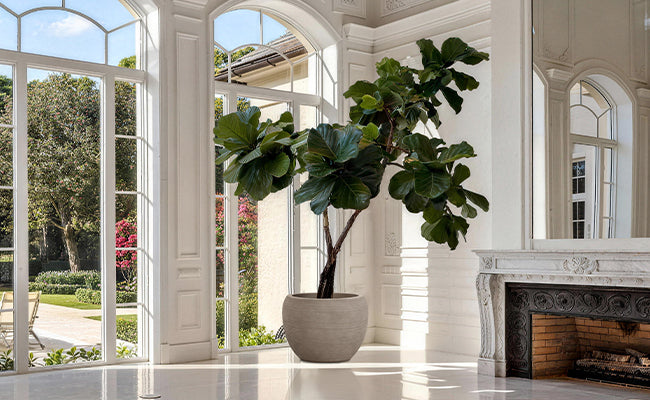
If your office feels too empty or visually flat, a ficus can create a stronger presence.
Its fuller foliage works well in medium-sized rooms, especially beside larger desks or shelving units.
Compared with an olive tree, a ficus fills more visual space, so it is better suited to offices where the plant does not need to fit into a narrow corner.
Give the branches enough room to spread so the tree looks natural rather than compressed against furniture.

Best for Larger Home Offices: Palm Tree
An artificial palm works well when the office has wider corners or more open floor space.
Its curved leaves create a softer, more relaxed look and can help break up straight furniture lines.
Because palm foliage spreads outward, it needs more clearance than a narrow olive tree or Sansevieria.
For larger rooms, a palm can work well beside a reading chair, storage area, or open wall where the foliage has enough space to extend naturally.

Quick Guide: Which Plant Should You Choose?
If you are deciding between several options, use the room itself as the starting point.
Choose Bamboo if you only have desk or shelf space.
Choose Sansevieria if you need greenery in a narrow floor area.
Choose an Olive Tree if you want height without dense foliage.
Choose a Ficus if the room needs a fuller, more noticeable plant.
Choose a Palm if you have a larger office and more room around the foliage.
This approach is usually more useful than choosing by plant height alone.
Where Should You Place Artificial Plants?
Good placement can make an artificial plant feel much more natural.
Common locations include:
-
Beside the desk
-
Next to a bookshelf
-
In an empty corner
-
Behind the desk for video calls
-
On a cabinet or shelf
If the plant is part of your video-call background, place it slightly to one side rather than directly behind your chair.
For floor plants, leave enough space around the foliage so chairs and walkways stay clear.
What Size Artificial Plant Works Best?
1–2 ft: Desk, shelf, or cabinet
3–4 ft: Small corners or beside low furniture
5–6 ft: Most home offices
6–7 ft: Larger rooms or higher ceilings
Width matters just as much as height.
A slim 6 ft artificial tree may fit a compact office more easily than a wide 5 ft palm, so always consider the full shape of the plant before choosing a size.
How to Make Artificial Plants Look More Natural
Shape the branches after unpacking instead of leaving them perfectly symmetrical.
A decorative planter can also help the plant blend into the room. Neutral ceramic, stone, or textured planters usually work well with office furniture.
Avoid placing greenery in every available corner. One larger plant with one smaller accent usually looks more intentional than several unrelated plants spread around the room.
FAQ
What artificial plant is best for a very small home office?
Bamboo and Sansevieria are usually the easiest options because they take up less visual and floor space. A slim olive tree can also work if you still want more height.
What artificial plant works best behind me during video calls?
Olive trees and ficus trees are good choices because they add height and texture. Position the plant slightly to one side of your chair so the background looks balanced rather than staged.
Should I choose a small desk plant or a tall floor plant?
Choose a desk plant if floor space is limited. If you have an empty corner or a large desk that feels visually heavy, a 5–6 ft floor plant can create better balance.
How do I know if an artificial tree is too large for my office?
Check both height and canopy width. If the branches interfere with your chair, desk, shelving, or walking space, the tree is probably too large for the room.
How can I make an artificial office plant look less fake?
Shape the branches individually, use a better decorative planter, and place the plant somewhere a real plant would naturally make sense, such as near a window, shelf, or open corner.
By Vitalismo Design Team


Dejar un comentario
Este sitio está protegido por hCaptcha y se aplican la Política de privacidad de hCaptcha y los Términos del servicio.