
What Size Artificial Tree Do I Need? A Room-by-Room Guide
A 5FT and a 7FT artificial tree can look surprisingly similar on a product page—but completely different once they are placed in a real room.
Choosing the right size is not simply about picking the tallest tree your ceiling can handle. The best fit depends on ceiling height, floor space, furniture scale, and the shape of the tree itself.
This artificial tree size guide will help you choose the right height for living rooms, bedrooms, entryways, home offices, and larger open spaces.
Start With the Space, Not the Tree
Before choosing between a 5FT, 6FT, or 8FT artificial tree, measure the area where you plan to place it.
Focus on four things:
- Ceiling height: Leave enough breathing room above the tallest branches.
- Available width: Check how far the foliage can spread without crowding furniture or walkways.
- Nearby furniture: A tree should feel balanced beside sofas, consoles, desks, or cabinets.
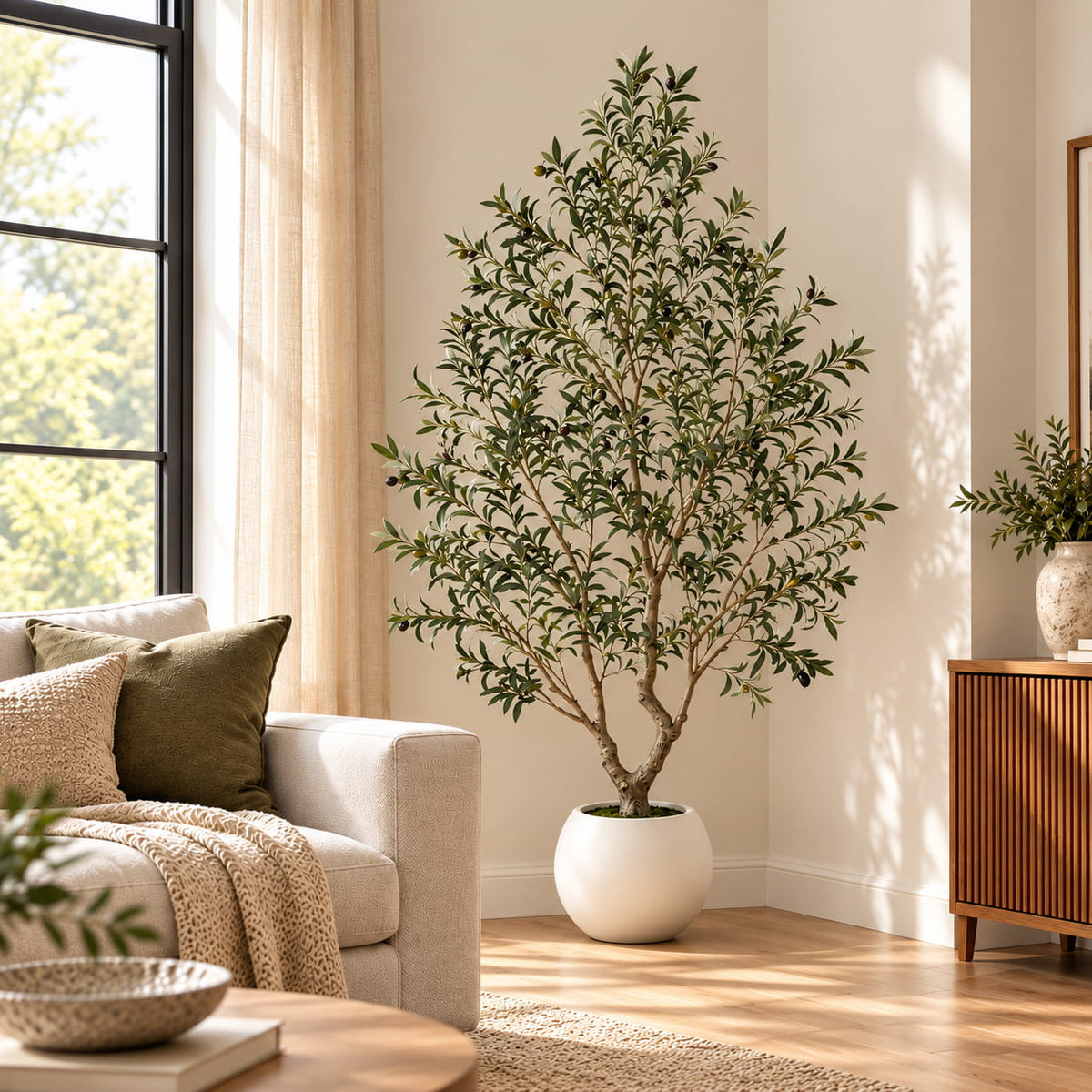
- Tree shape: A slim olive tree and a full palm may be the same height but take up very different amounts of space.
This last point is especially important.
A tall, narrow artificial tree can often fit a small corner better than a shorter tree with a wide canopy.
Artificial Tree Size Guide at a Glance
Tree Height Best For Overall Effect
Under 2FT Desks, shelves, countertops Small decorative accent
2–4FT Entryways, compact corners, planters Low-profile greenery
4–5FT Bedrooms, offices, apartments Subtle floor accent
5–6FT Living rooms, offices, entryways Balanced everyday size
7–8FT Larger rooms, open-plan spaces Strong focal point
9FT+ High ceilings, large interiors Statement greenery
Use the chart as a starting point. Width and silhouette matter just as much as height.

2–4FT Artificial Plants: Best for Smaller Spaces
A 2–4FT artificial plant works well when you want noticeable greenery without creating a major focal point.
This size is especially useful for:
- Small entryways
- Compact corners
- Beside low cabinets
- Covered porches
- Decorative planters
Artificial agave, compact cedar, and other structured plants work particularly well at this scale because they add shape without taking over the room.
This range is also useful when windows, artwork, shelving, or furniture limit how tall a plant can be.
4–5FT Artificial Trees: Easy to Style
A 4–5FT artificial tree is a practical option for rooms that need greenery without too much visual weight.
It works especially well in:
- Bedrooms
- Home offices
- Apartments
- Reading corners
- Beside dressers or consoles
A 5FT artificial tree generally feels more understated than a 6FT or 7FT tree, making it a good choice when the plant is meant to support the room rather than become its main feature.
5FT vs 6FT Artificial Tree: Which Is Better?
For many shoppers, this is the most useful size comparison.
Choose a 5FT artificial tree if:
- The room is compact
- The tree will sit beside a desk or smaller piece of furniture
- You prefer a subtle look
- Floor space is limited
Choose a 6FT artificial tree if:
- You want more vertical presence
- The tree will sit beside a sofa or accent chair
- You need to fill an empty corner
- The room has enough space for a slightly larger silhouette
For many standard living rooms, 6FT offers a good balance between visibility and flexibility.
But height alone does not tell the whole story.
A 6FT slim olive tree may feel light and vertical, while a 6FT palm can appear much fuller because its leaves extend farther outward.
6FT Artificial Trees: The Most Versatile Size
If you are unsure where to start, 6FT is one of the most versatile heights for a floor-standing artificial tree.
It can work in:
- Living rooms
- Bedrooms
- Home offices
- Entryways
- Empty corners
- Beside sofas or accent chairs
At this height, the tree is tall enough to balance larger furniture without automatically dominating the room.
The key is choosing the right shape.
For tighter spaces, look for a slim or upright silhouette.
For open corners, a fuller tree can help fill the space more naturally.

7–8FT Artificial Trees: More Height, More Presence
A 7FT or 8FT artificial tree works best when you want greenery to become a stronger part of the room.
Consider these sizes for:
- Spacious living rooms
- Open-plan interiors
- Large entryways
- High or empty corners
- Offices and reception areas
Taller trees naturally draw the eye upward, which can make a room feel more layered and finished.
Again, width matters.
A tall olive tree often creates a lighter, more open silhouette, while a palm tree of the same height can create significantly more visual volume.

9FT Artificial Trees: Best for Open Spaces
A 9FT artificial tree is better suited to rooms with generous vertical and horizontal space.
It can work well in:
- High-ceiling living rooms
- Large open-plan interiors
- Commercial spaces
- Oversized corners
- Large covered patios
At this scale, the tree becomes a design feature rather than a small decorative accent.
In a standard-sized room, however, a 9FT tree can quickly feel oversized, so measuring before purchase is especially important.
What Size Artificial Tree Is Best for Each Room?
Living Room
For most living rooms, 5–7FT is a useful starting range.
A 5FT tree works well when greenery is meant to stay subtle.
A 6FT tree gives an empty corner more presence without feeling too dramatic.
A 7FT or 8FT tree works better in larger living rooms or spaces where the tree is meant to become a focal point.
If the tree will sit beside a sofa or in a narrow corner, consider a slim shape rather than simply moving down to a shorter size.
Bedroom
Bedrooms usually benefit from softer proportions.
A 4–6FT artificial tree can fill an unused corner while keeping the room calm and balanced.
In smaller bedrooms, choose an airy or narrow silhouette rather than dense foliage.
Entryway
Entryways are often limited more by width than height.
For smaller entryways, consider:
- 2–4FT plants
- Slim artificial trees
- Upright foliage
For larger foyers, a 6–8FT tree can create a stronger first impression.
Always check that branches do not interfere with doors or walking paths.

Home Office
For most home offices, 4–6FT is a practical range.
A 4–5FT plant works well beside a desk, cabinet, or bookshelf.
A 6FT tree can help fill an empty corner and create stronger visual separation within the room.
For very compact offices, a smaller bamboo or tabletop plant may be enough.

Open-Plan Spaces
Large open interiors can handle taller plants much more easily.
A 7–9FT artificial tree can help:
- Fill an oversized corner
- Add height beside low furniture
- Break up a large blank wall
- Add structure to an open layout
This is where tall olive trees and artificial palms tend to work especially well.
Slim vs Full Artificial Trees: Width Matters More Than You Think
Two trees can have the same listed height and still feel completely different once placed in a room.
A slim artificial tree is generally better for:
- Narrow corners
- Beside sofas
- Behind consoles
- Apartments
- Small entryways
A fuller artificial tree is better suited to:
- Large empty corners
- Spacious living rooms
- Wide foyers
- Areas that need more visual volume
If floor space is limited, do not automatically choose a shorter tree.
A taller, slimmer tree can sometimes look more balanced than a short tree with wide foliage.
How to Measure Before Buying
Before ordering an artificial tree, take three simple measurements.
1. Measure the Height
Measure from the floor to the ceiling or to the nearest architectural feature above the tree.
Leave some visible space above the top branches so the tree does not look compressed.
2. Measure the Width
Measure both the floor area and the space available for the branches.
Remember that artificial trees usually need to be shaped after unpacking, so the final canopy may become wider once the branches are fully opened.
3. Check Nearby Furniture
Look at the height and width of the sofa, cabinet, chair, or table closest to the tree.
The plant should complement the surrounding furniture rather than disappear behind it or overwhelm it.
Don't Forget the Planter
The planter can change how tall and substantial an artificial tree appears.
Placing a basic nursery pot inside a taller decorative planter or basket can add visual height and make the arrangement feel more finished.
This is especially useful when a tree feels slightly too low beside furniture.
Before changing the planter, check both the pot diameter and the total finished height.
The Simple Rule: Choose Proportion, Not Just Height
There is no single artificial tree size that works for every home.
Instead of asking only:
“Should I buy a 5FT or 6FT artificial tree?”
Ask:
“How much height, width, and visual presence does this space need?”
For smaller rooms, slim trees and medium heights usually work best.
For standard living rooms, 5–7FT artificial trees offer plenty of flexibility.
For larger rooms and tall ceilings, 7–9FT trees can create the scale needed to make the greenery feel intentional.
Measure the space first, then compare the tree's height, width, and silhouette before making your choice.
Frequently Asked Questions
What size artificial tree is best for a living room?
A 5–7FT artificial tree works well in many living rooms. Smaller rooms often suit 5–6FT trees, while larger spaces can accommodate 7–8FT options.
Is a 6FT artificial tree too tall for a small room?
Not necessarily. A slim 6FT artificial tree can take up less usable space than a shorter tree with a wide canopy.
Should I choose a 5FT or 6FT artificial tree?
Choose 5FT for a more subtle look or a smaller room. Choose 6FT when you want more height and presence, especially beside a sofa or in an empty corner.
What size artificial tree works best in a small apartment?
A 4–6FT slim artificial tree is usually easier to place in a small apartment because it adds vertical greenery without taking up too much floor space.
How much space should I leave above an artificial tree?
Leave enough visible space above the tallest branches so the tree does not look squeezed against the ceiling. The exact amount depends on the room and tree shape.
Should I choose a slim or full artificial tree?
Choose a slim tree for narrow spaces and smaller rooms. Choose a fuller tree when you have a larger corner or want the greenery to create more visual impact.
Vitalismo Editorial Team
Practical guides for choosing and styling artificial plants in everyday spaces.

اترك تعليقًا
This site is protected by hCaptcha and the hCaptcha Privacy Policy and Terms of Service apply.