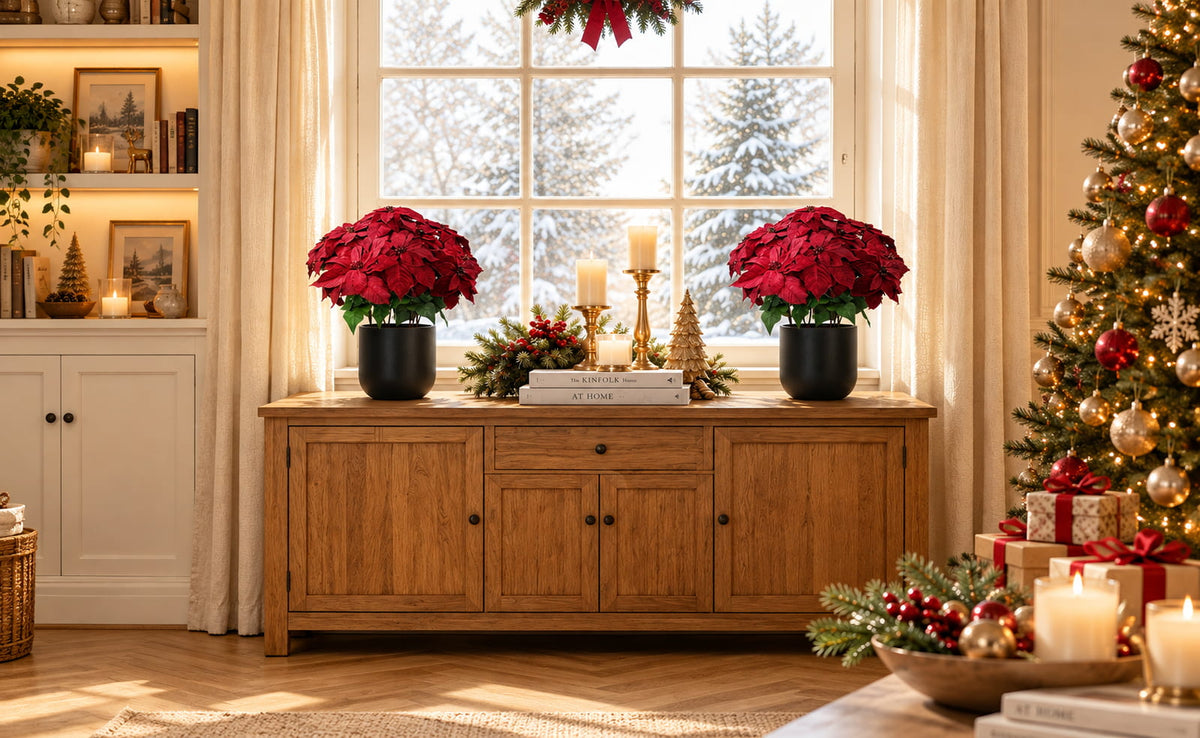



How to Make Artificial Christmas Greenery Look Real
Artificial Christmas greenery makes holiday decorating easier, cleaner, and more reusable—but even a good faux garland or evergreen can look flat straight out of the box.
The difference often comes down to styling.
A few minutes spent shaping branches, adjusting the drape, and choosing the right lighting can make artificial Christmas greenery look noticeably softer, fuller, and more natural.
If your greenery feels too stiff, too symmetrical, or slightly “plastic,” start with these simple adjustments before adding more decorations.
Fluff and Shape the Greenery First
Before adding lights, ribbons, or ornaments, shape the greenery itself.
Artificial greenery is usually compressed during packaging and shipping, so the branches may sit close to the center stem when first unpacked.
Start at one end and gently separate the foliage. Move some branches upward, some outward, and others slightly downward.
Avoid spreading every branch at exactly the same angle.
Real evergreen foliage naturally varies in direction and density, so a slightly irregular shape usually looks more convincing than a perfectly even arrangement.
A useful check is to look at the center stem after fluffing.
If it is still easy to see, the greenery probably needs more shaping before you begin decorating.
For an artificial Christmas garland, work slowly from one end to the other. When placing it on a mantel, staircase, shelf, or console, let the branches follow the shape of the surface instead of forcing the garland into a perfectly straight line.
A few stems extending naturally over an edge can make the arrangement feel softer and more realistic.
Make Artificial Garland Look Fuller
If your garland still looks thin after shaping, focus on adding depth rather than covering it with more decorations.
One common mistake is decorating a flat garland before fixing the shape itself.
To make artificial garland look fuller, try:
-
Pulling hidden branches forward from the center.
-
Adjusting stems at different heights.
-
Overlapping foliage around thinner areas.
-
Adding a few loose evergreen picks where gaps remain.
-
Layering two garlands for wider mantels or staircases.
The goal is not to make every section equally dense.
A little variation often creates a more natural result.
For smaller spaces, one well-shaped garland is usually enough. For a large fireplace or wide staircase, layering two pieces can add volume without making the arrangement feel overly decorated.
Softer greenery, such as an artificial Norfolk pine garland, works especially well when you want a relaxed drape rather than a stiff, heavily structured shape.
Use Warm Lighting to Add Depth
Lighting can make a major difference in how faux Christmas greenery looks once it is in place.
Warm white lights usually work best for a soft, natural holiday look.
Instead of placing every light directly on top of the foliage, weave some deeper into the branches and leave others closer to the surface.
This creates small areas of light and shadow.
That extra depth helps the greenery feel less flat and can soften the appearance of artificial materials.
Try to keep the wire hidden behind the branches whenever possible.
If the wire is clearly visible from several feet away, move it deeper into the foliage and reshape the surrounding stems.
The lights should enhance the greenery rather than become the first thing you notice.
For a simple Christmas display, well-shaped greenery and warm lights may already be enough.
Keep Decorations Simple and Balanced
More decoration does not always make artificial greenery look better.
If every branch is covered with ribbon, ornaments, bells, berries, pinecones, and lights, the shape of the greenery can disappear completely.
Instead, treat the greenery as the main visual layer and add a few accents that support it.
Good options include:
-
Warm white lights
-
Velvet or fabric ribbon
-
A small number of ornaments
-
Pinecones
-
Berries
-
Christmas stockings
-
Candles placed nearby
Leave some foliage visible between decorations.

This gives the arrangement room to breathe and helps Christmas greenery decor feel more intentional rather than over-styled.
If one area starts to look crowded, remove one or two decorations before adding anything else.
A balanced arrangement usually looks more natural than one where every empty space has been filled.
Choose Greenery with Realistic Texture and Shape
Styling can improve almost any artificial greenery, but the product itself still matters.

When choosing realistic artificial greenery, look for:
-
Varied branch lengths
-
Flexible stems
-
Layered foliage
-
Natural branch movement
-
Subtle changes in green tones
-
Enough depth to hide the center structure
Flexible stems are especially useful because they allow you to adjust the shape around different spaces rather than forcing the greenery into one fixed form.
Different evergreen styles also create different visual effects.
Norfolk Pine
Norfolk pine has a softer, more relaxed silhouette.
Its layered branches work especially well on mantels, staircases, dining tables, consoles, and shelves.
An artificial Norfolk pine garland is a good choice when you want greenery that can drape naturally instead of sitting in a rigid line.
For a mantel, allow the ends to fall slightly. For a table, keep the center lower and let some branches extend gently outward.
Cedar
Cedar-style greenery usually feels fuller and slightly denser.
It works well in living rooms, entryways, and larger spaces where you want the greenery to have more visual presence.
Cedar is also a strong choice for a more traditional evergreen look.
Cypress
Cypress has a slimmer, more vertical form.
That makes it especially useful for corners, narrow entryways, and smaller spaces where floor area is limited.
Its upright shape adds height without making the room feel crowded.
Choosing the right greenery for the space makes styling easier from the start.
Use the Same Principles Throughout the Home
The same basic approach works across different rooms.
On a fireplace mantel, let the garland follow the edge naturally instead of pulling it completely straight.
Along a staircase, create gentle curves rather than stretching the greenery tightly along the railing.
On a dining table or console, keep the arrangement loose and allow a few stems to extend outward.
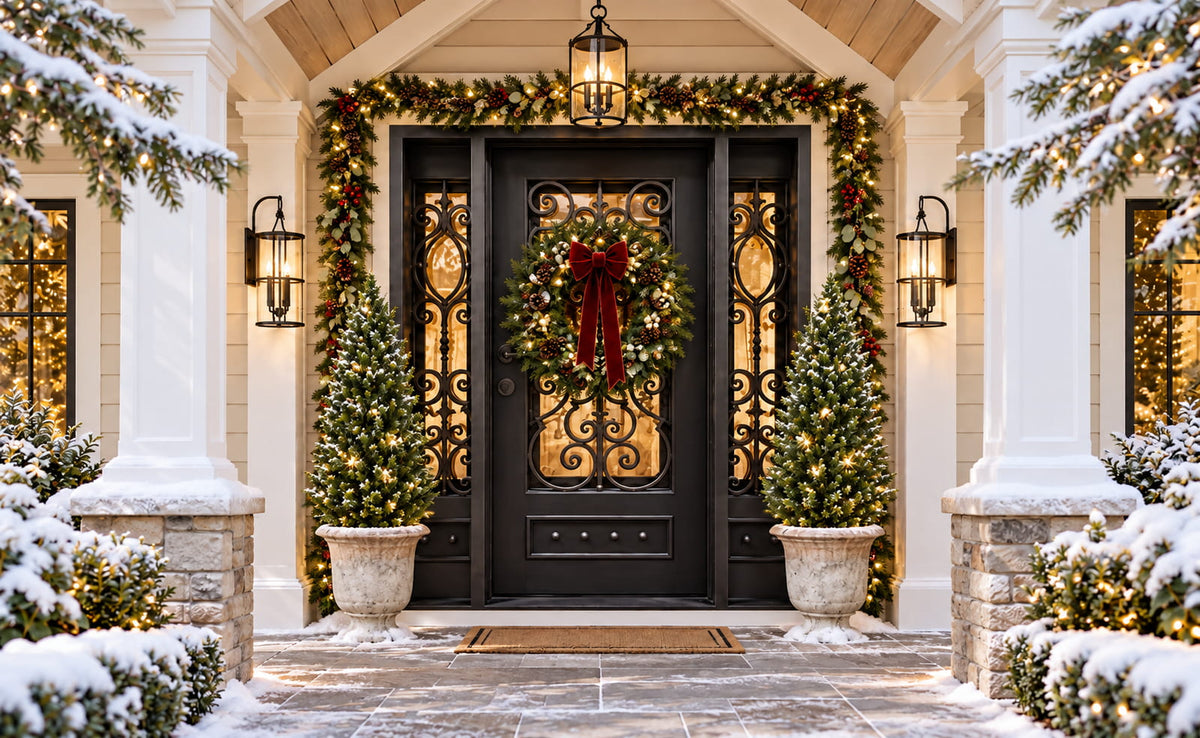
In an entryway or empty corner, a slim artificial evergreen can add height without requiring much additional decoration.
The goal is not perfect symmetry.
Natural greenery has movement, unevenness, and variation, and artificial greenery tends to look more convincing when it keeps some of that character.
Frequently Asked Questions
How do you make artificial Christmas greenery look real?
Start by reshaping the branches after unpacking. Separate compressed foliage, vary the direction of the stems, and avoid perfect symmetry. Warm lighting and simple decorations can also help the greenery look softer and more natural.
How do you fluff artificial Christmas garland?
Work from one end to the other. Pull branches away from the center stem, then adjust some upward, some outward, and others slightly downward. Step back occasionally to check the overall shape.
How do you make artificial garland look fuller?
Fluff the branches thoroughly first. If the center still looks exposed, adjust hidden stems forward, add a few evergreen picks, or layer two garlands in larger spaces.
How do you keep faux greenery from looking plastic?
Avoid placing every branch in the same direction. Use warm rather than harsh lighting, keep decorations simple, and choose greenery with layered texture, natural branch movement, and subtle color variation.
Can artificial Christmas greenery be reused every year?
Yes. Remove ornaments and lights before storing it, reshape any compressed branches, and keep the greenery in a dry place where it will not be tightly crushed.
Final Thoughts
Making artificial Christmas greenery look real is usually less about adding more and more about shaping what you already have.
Start with the branches.
Fluff compressed foliage, create natural variation, and let the greenery follow the space.
Then add warm lighting and a few simple decorations without covering the texture underneath.
Whether you are styling an artificial Christmas garland across a mantel or adding evergreen accents to an entryway, small adjustments can make the final result feel noticeably fuller, softer, and more natural.
With realistic texture, flexible shaping, and thoughtful styling, faux Christmas greenery can become an easy and reusable part of your holiday decor year after year.
Vitalismo Editorial Team
Sharing practical tips for artificial plants, greenery, and seasonal home decor.


اترك تعليقًا
This site is protected by hCaptcha and the hCaptcha Privacy Policy and Terms of Service apply.