

Artificial Cedar, Olive & Palm Trees for Modern Home Decor
Artificial trees can bring height, texture, and natural color into a room without the care that comes with live plants. They work especially well in spaces with limited sunlight, busy routines, or areas where real plants are difficult to maintain.
Among the most versatile options are artificial cedar trees, olive trees, and palm trees. Each has a different shape and visual character, so choosing the right tree is less about following a trend and more about understanding the space around it.
A well-placed artificial tree should feel like part of the room, not something added at the last minute.
Choosing the Right Artificial Tree
Different tree shapes create different moods.
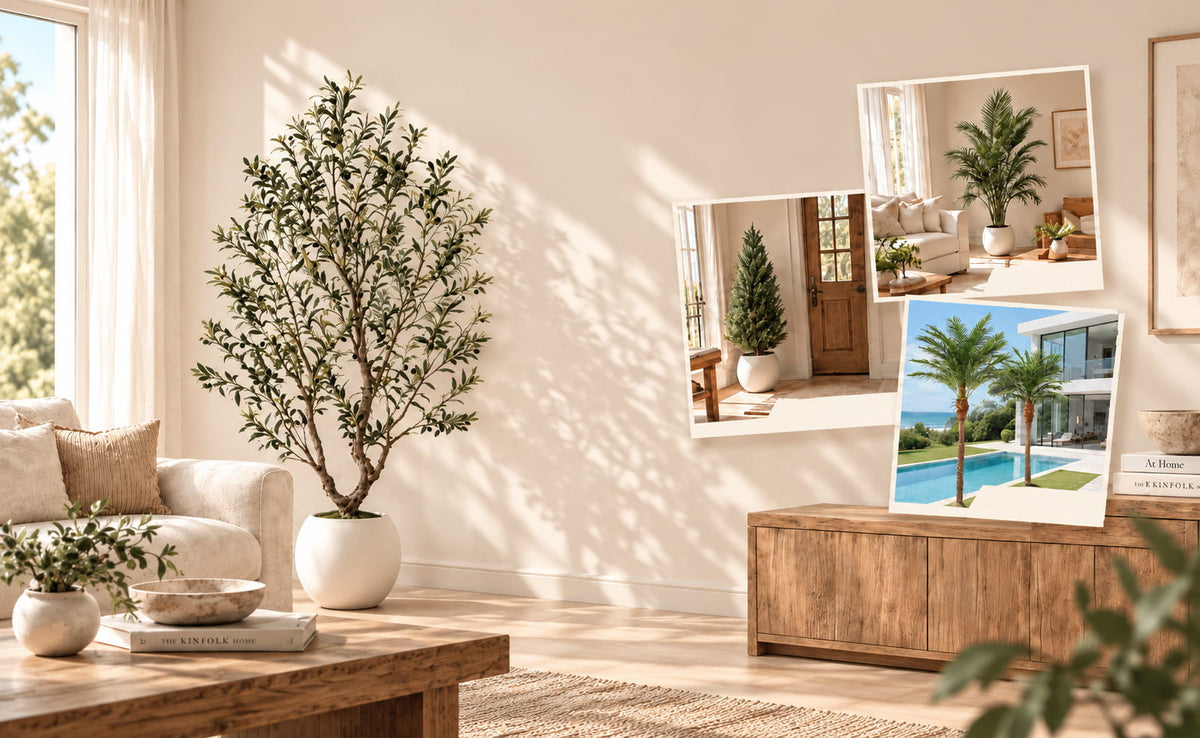
Artificial olive trees have a lighter and more open appearance. Their narrow leaves and relaxed branches work naturally in living rooms, bedrooms, dining areas, and entryways. They pair especially well with neutral colors, natural wood, linen, stone, and warm modern interiors.
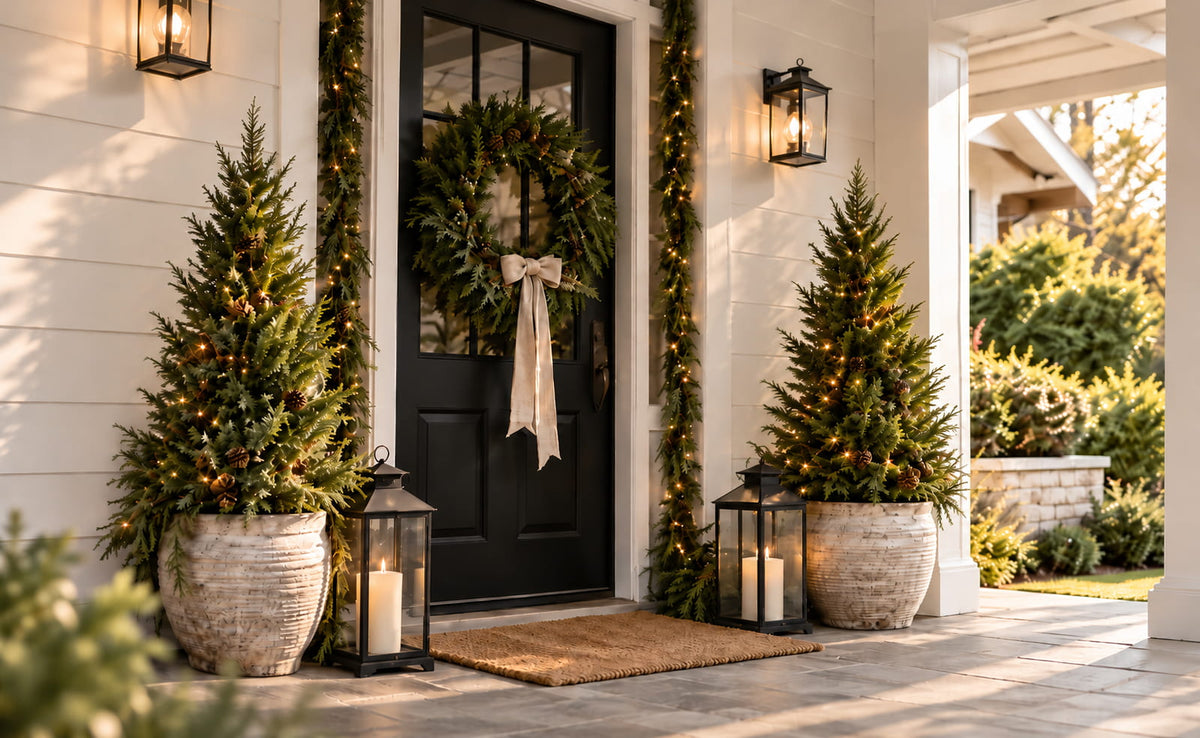
Artificial cedar trees have a fuller and more structured shape. They are useful when a space needs stronger vertical greenery or a more substantial silhouette. Cedar works particularly well in entryways, larger corners, seasonal spaces, and covered outdoor areas when the product is suitable for outdoor use.
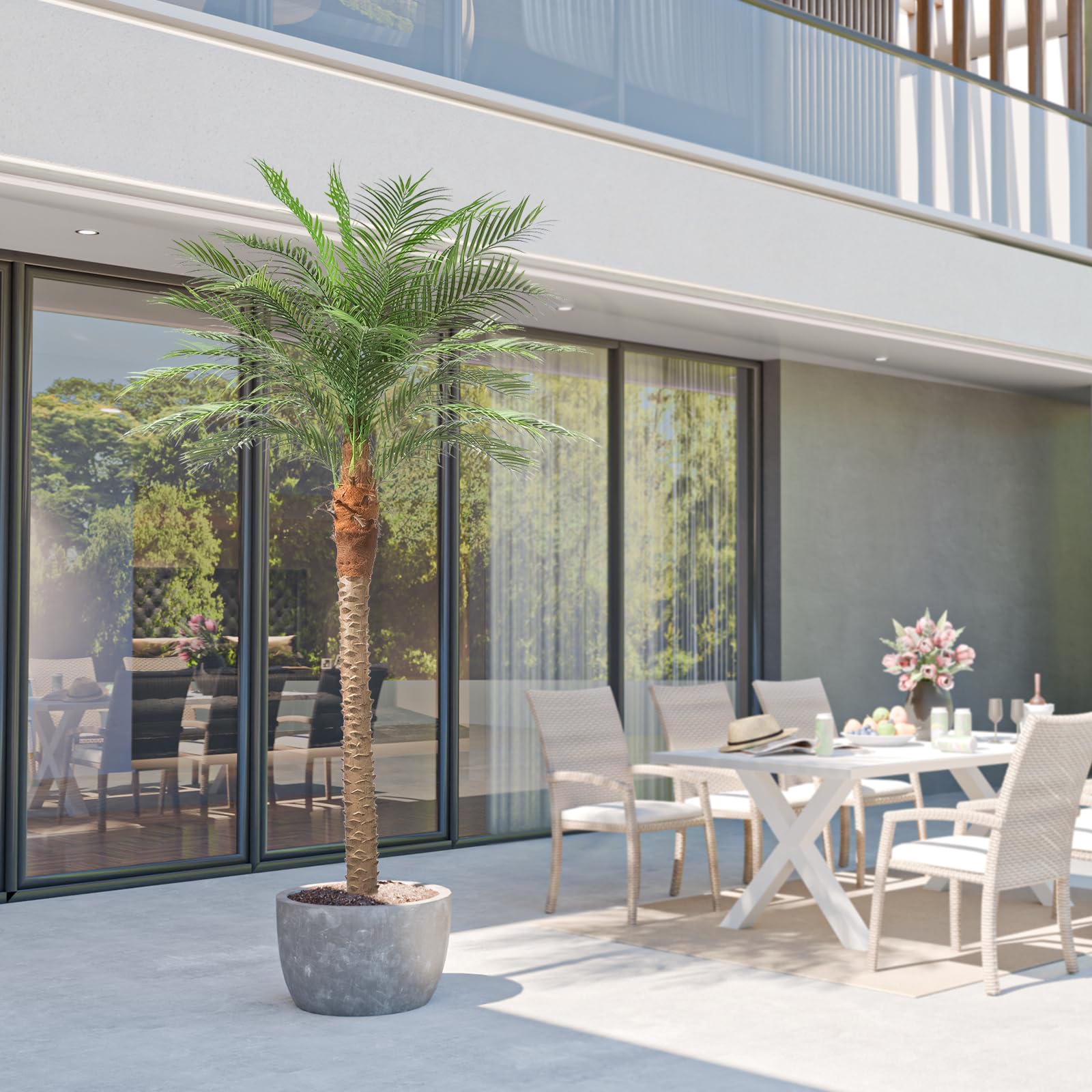
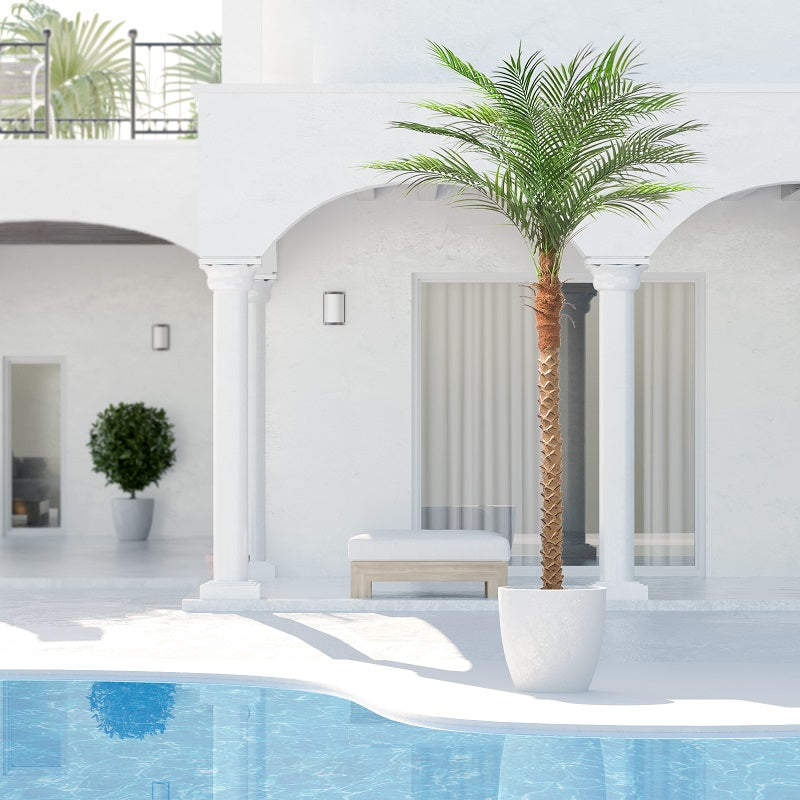
Artificial palm trees bring more movement into a room. Their long leaves can soften modern furniture and work well in living rooms, sunrooms, offices, and relaxed contemporary spaces.
The best choice depends on the size of the room, the furniture nearby, and how much visual weight the space needs.
Finding the Right Height and Proportion
Tree height has a major effect on how balanced a room feels.
A useful starting point is to choose a tree that reaches around two-thirds of the ceiling height. This gives the plant enough presence without making it feel oversized.
For many rooms with standard ceilings, a 5- to 7-foot artificial tree can work well. Larger rooms or open-plan spaces may support something taller, while smaller bedrooms or entryways often look better with a slimmer tree.
Width matters too.
A tree may have the right height but still feel too large if the branches press against nearby furniture or walls. Leave enough space around the canopy so the original shape remains visible.
Use the Planter to Complete the Arrangement
The planter changes how the entire tree feels.

A realistic artificial tree placed in a small plastic nursery pot can look unfinished, even if the foliage is detailed. Moving it into a decorative planter helps the tree connect with the rest of the room.
For organic modern and contemporary interiors, ceramic, stone-look, matte, or lightly textured planters usually work well. Natural baskets can create a softer look, while darker planters add contrast in light-colored rooms.
The planter should also match the scale of the tree.
A tall or full tree needs enough visual weight at the base to feel stable. If the planter is deep, add filler material inside to secure the inner pot and raise the tree to the correct height.
Decorative moss, stones, or bark can then be added on top for a more finished appearance.
Make the Tree Look More Natural
Artificial trees often need reshaping after shipping or storage.

Instead of pulling every branch outward at once, begin with the main structure. Adjust the larger branches first, then separate smaller stems and leaves.
Avoid making both sides perfectly symmetrical.
Real trees naturally have small gaps, uneven branch directions, and different leaf angles. Recreating some of that variation can make artificial greenery look much more convincing.
For olive trees, let some leaves face forward while others turn slightly outward or downward.
For palms, avoid spreading every leaf into the same flat direction.
For cedar trees, keep some outer branches slightly looser so the tree maintains depth instead of forming one dense shape.
Vitalismo Styling Tip: Shape the main branches first and adjust the smaller foliage afterward. This helps preserve the tree’s overall silhouette while creating a more natural layered look.
Place Artificial Trees Where They Add Balance

The best location is usually a place that feels visually empty rather than simply an unused corner.
Beside a sofa, an artificial tree can add height and balance low furniture. Near a console or cabinet, it can soften hard edges and make the arrangement feel more complete.
Trees can also work beside fireplaces, reading chairs, windows, or at the end of a dining area.
In open-plan homes, a taller tree can help create separation between spaces without adding a physical divider.
Try to leave some open space between the tree and nearby furniture. When branches are pushed tightly against walls or sofas, the tree can lose its natural shape.
Match the Tree to the Style of the Room

Artificial greenery should support the existing interior rather than compete with it.
In an organic modern room, olive trees work well with cream upholstery, warm wood, stone, linen, and darker accents.
Cedar trees pair naturally with rustic, transitional, and seasonal interiors, especially when combined with wood and woven textures.
Palm trees suit coastal, modern, tropical, and relaxed contemporary spaces.
There is no need to decorate heavily around the tree. In many cases, the most realistic styling comes from keeping the surrounding area simple.
Use Light to Add Depth
Soft natural light is ideal for artificial greenery because it creates gentle shadows between leaves and branches.
Harsh direct lighting can make synthetic materials more noticeable, especially when the light hits the foliage from a very close distance.
During the evening, nearby floor lamps, table lamps, or wall lights can add warmth without shining directly on the tree.
Indirect light often creates a more natural effect because the shadows help define the shape of the branches.
Avoid Common Styling Mistakes
One common mistake is choosing a tree that is too large for the available space.
Another is placing it directly against the wall, which can flatten the canopy and make the tree look less natural.
Planter size can also affect the final result. A base that is too small may make a tall tree feel unstable, while an oversized planter can overpower a slimmer tree.
Finally, avoid filling the area with too many accessories.
A realistic artificial tree usually looks better when it has enough space to stand on its own.
Indoor and Outdoor Placement
Not every artificial tree is designed for outdoor use.
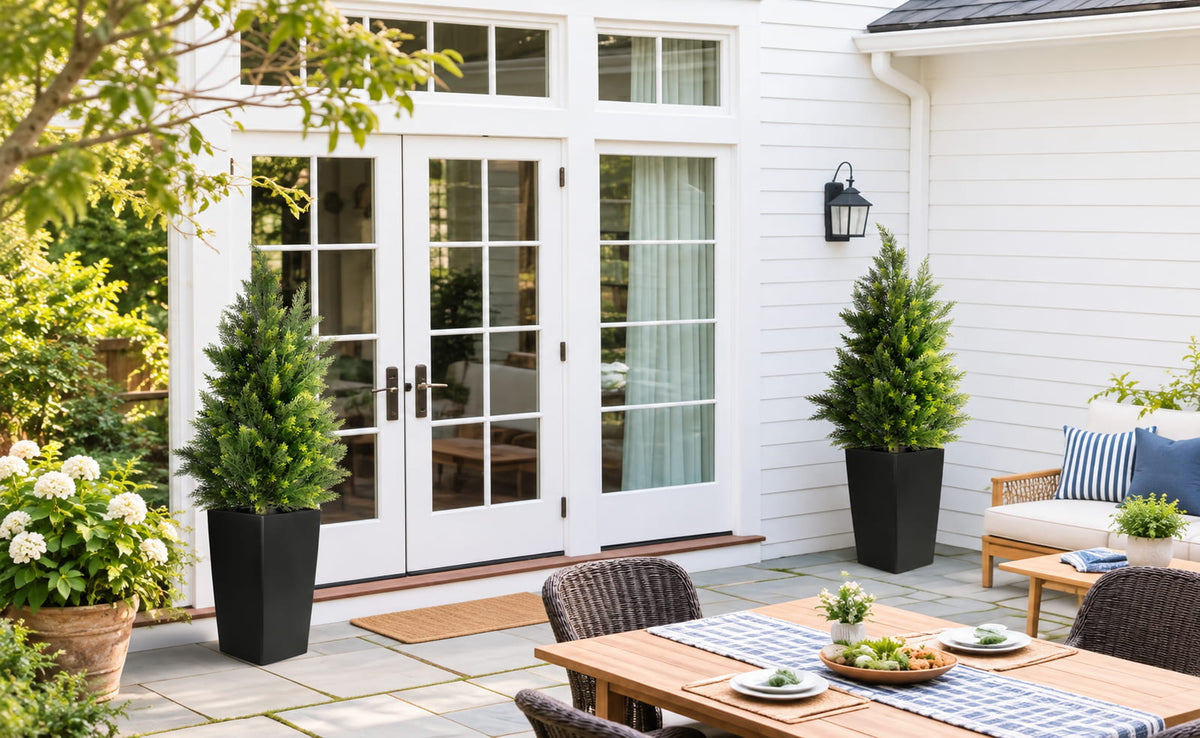
If you plan to place an artificial cedar, olive, or palm tree outside, check the individual product details for UV resistance and outdoor suitability.
Even outdoor-rated artificial plants generally last longer when they are protected from extreme weather, strong wind, and constant direct exposure.
Covered patios and sheltered entryways are often easier environments for long-term styling.
Bringing Everything Together
Artificial trees are most successful when the size, planter, placement, and room style all work together.
An artificial olive tree can create a softer and more relaxed look. An artificial cedar tree can add fullness and structure, while an artificial palm tree brings movement and a more open feeling.
Choose the tree based on the space rather than the trend, shape the branches carefully, and give the canopy enough room to keep its natural form.
With simple styling and the right proportions, artificial greenery can become a natural part of the room instead of feeling like a decorative extra.
About Vitalismo
Vitalismo focuses on realistic artificial plants for modern homes. We share practical styling ideas that help make everyday spaces feel more natural, balanced, and easy to maintain.

Leave a comment
This site is protected by hCaptcha and the hCaptcha Privacy Policy and Terms of Service apply.