


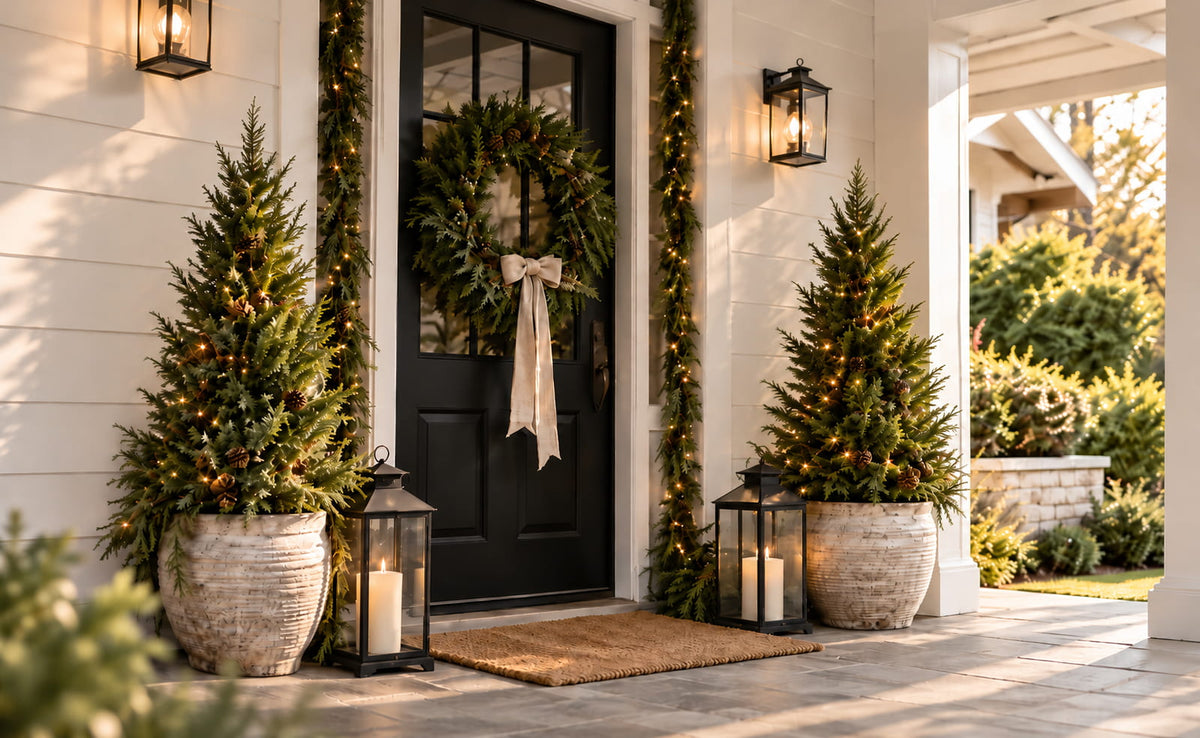
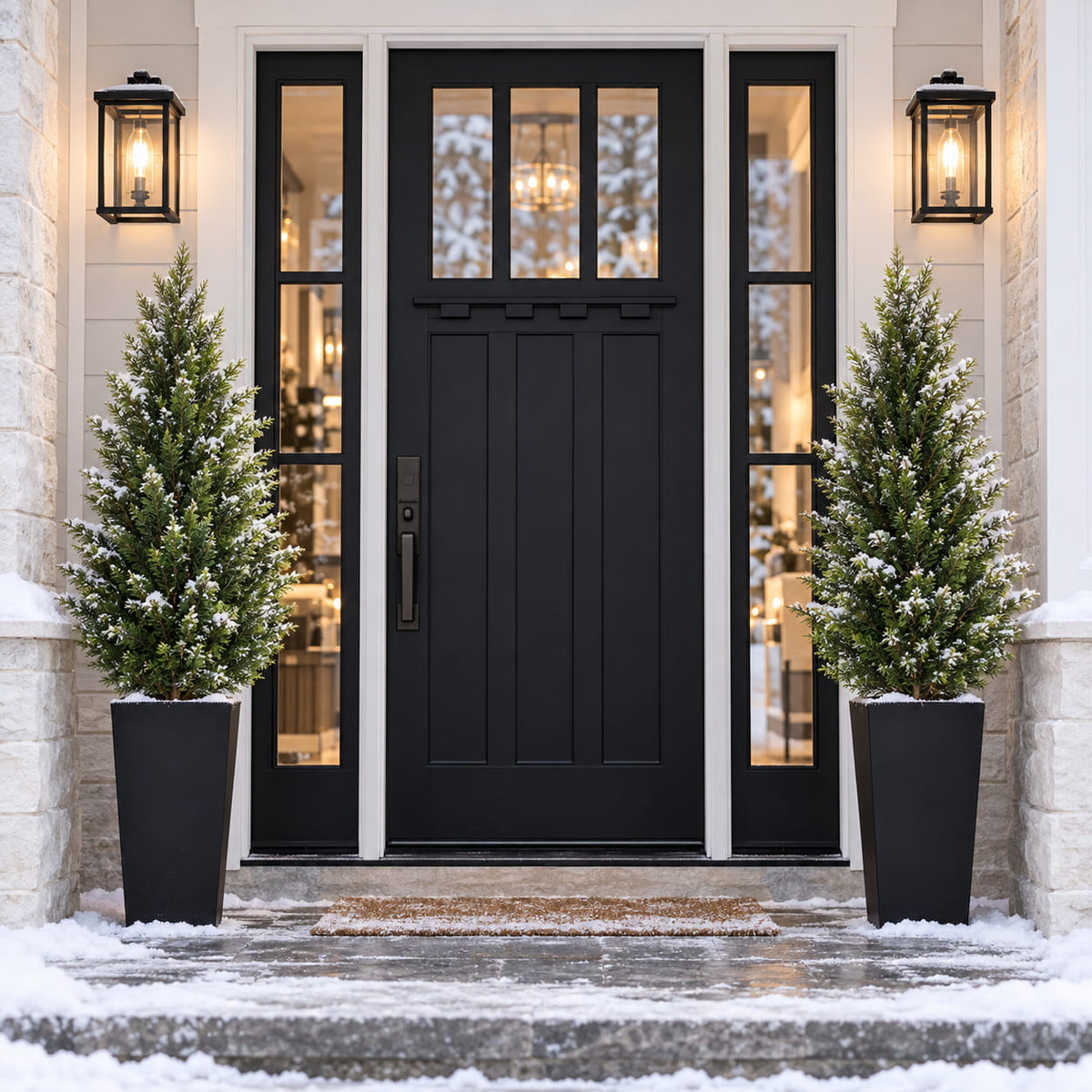
Can Artificial Plants Stay Outside in Winter? Snow & Cold Guide
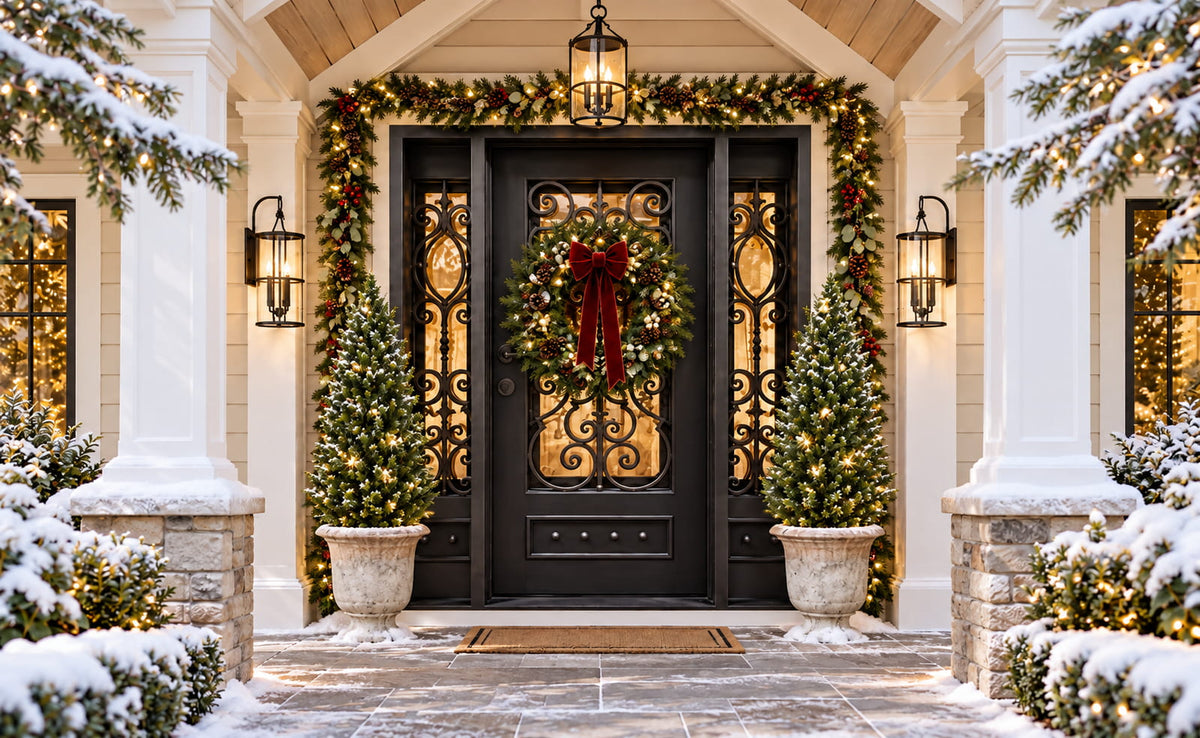
A snow-covered front porch can look beautiful in winter—until you step outside after a storm and find your artificial cedar tree leaning, flattened, or weighed down by snow.
So, can artificial plants stay outside in winter? And does snow actually damage an artificial cedar tree?
In most cases, cold weather itself is not the biggest concern. Heavy snow, ice buildup, strong wind, and prolonged exposure to severe weather usually create more stress on an artificial plant.
For outdoor artificial cedar trees, a little snow is often manageable. Problems are more likely to appear when snow becomes heavy enough to place continuous pressure on the branches or make the whole tree unstable.
Can Artificial Plants Stay Outside in Winter?
Many artificial plants can stay outside during winter if they are designed for outdoor use and placed in suitable conditions.

Unlike living plants, artificial plants do not have roots or living tissue that can suffer frost damage. They do not need watering, dormancy protection, or special care to prevent roots from freezing.
However, artificial plants are still made from materials such as PE, plastic, wire, resin, and metal. These materials can be affected by moisture, pressure, wind, and repeated freezing and thawing.
That means outdoor-ready artificial plants are not necessarily weatherproof in every winter condition.
Placement matters too.
An artificial cedar tree under a covered porch will usually experience much less stress than the same tree placed in an open yard where it is directly exposed to snow, freezing rain, and strong wind.
Does Cold Weather Damage Artificial Plants?
Cold weather generally affects artificial plants much less than it affects living plants.
An artificial cedar tree will not suffer frost-damaged roots or lose foliage simply because the temperature drops below freezing.
However, very cold temperatures may temporarily make some synthetic materials less flexible.
If an artificial tree has been sitting outside in freezing conditions, avoid aggressively bending or reshaping the branches immediately. Let the foliage warm slightly before making larger adjustments.
In most cases, the bigger concern is not cold alone, but cold combined with heavy snow, ice, or strong wind.
Does Snow Damage Artificial Cedar Trees?
Light, dry snow is usually less concerning than heavy, wet snow that remains on the branches for a long time.
The main issue is weight.

Artificial cedar trees often have dense foliage where snow can easily collect. As more snow builds up, the added weight may gradually push the branches downward.
Heavy snow may cause:
- branches to bend
- foliage to look flattened
- the natural shape to become uneven
- the tree to lean
- a lightweight planter to tip over
Wet snow deserves extra attention because it is heavier than fresh, powdery snow and can remain packed between branches.
Ice buildup creates a similar problem. When freezing rain or melting snow freezes around the foliage, the added weight stays on the tree until temperatures rise.
So when an artificial cedar looks flattened after a storm, it does not necessarily mean the tree is permanently damaged.
In many cases, the branches are simply carrying more weight than they were designed to hold for an extended period.
What Should You Do If Snow Flattens Your Artificial Cedar Tree?
A snow-flattened artificial cedar tree can often recover much of its original shape.
The key is to avoid rushing the process.

Remove Loose Snow Gently
Start by brushing away loose snow from the upper branches.
Work from the top downward so snow does not keep falling onto areas you have already cleared.
Avoid aggressively shaking the tree while the foliage is frozen.
If the snow has become packed or partially frozen, allow it to loosen naturally instead of forcing it off.
Let Ice Melt Before Reshaping
If ice has formed around the foliage, wait until it melts before trying to bend the branches back into place.
Avoid using very hot water.
If the tree is portable, moving it to a sheltered location such as a covered porch or garage can help it warm gradually.
Let the Tree Dry and Reshape It Gradually
Once the snow and ice have melted, allow the tree to dry.
Then begin reshaping from the larger main branches before adjusting the smaller branch tips.
Do not try to make every branch perfectly symmetrical.
Natural cedar trees have slight irregularities, so a varied branch shape often looks more realistic.
If the whole tree has fallen over, also check the planter, trunk, connection points, and base before placing it upright again.
How to Protect Artificial Cedar Trees Before Heavy Snow
You do not need to bring every outdoor artificial plant indoors as soon as winter begins.
A few simple steps can reduce unnecessary stress.

Choose a Sheltered Location
Covered porches, recessed entryways, and protected patios can reduce direct exposure to heavy snow and freezing rain.
Sheltered placement is especially useful if your area receives frequent winter storms.
Avoid Roof Snowfall Zones
Do not place the tree directly beneath an area where large amounts of snow may suddenly fall from a roof.
Gradual snow accumulation is very different from a heavy mass falling onto the tree at once.
Remove Heavy Snow Before It Builds Up
There is no need to clear every light dusting.
The goal is simply to prevent large amounts of wet or compacted snow from sitting on the branches for too long.
Keep the Tree Stable
Tall artificial plants can become more top-heavy when snow or ice collects on the foliage.
A heavier outer planter or a more protected position can help improve stability.
Move Portable Trees During Severe Storms
Outdoor-ready does not mean storm-proof.
If unusually heavy snow, freezing rain, or strong wind is expected, moving a portable artificial cedar to a sheltered area can help protect its shape.
What to Look for in an Outdoor Artificial Cedar Tree
If you are choosing an artificial cedar tree for a porch, patio, or winter entryway, consider more than appearance alone.
Weather-Resistant Materials
For outdoor use, choose artificial greenery made with materials intended for seasonal exposure.
PE foliage is commonly used in realistic faux cedar designs because it can create natural-looking shape and texture.
A Size That Fits the Space
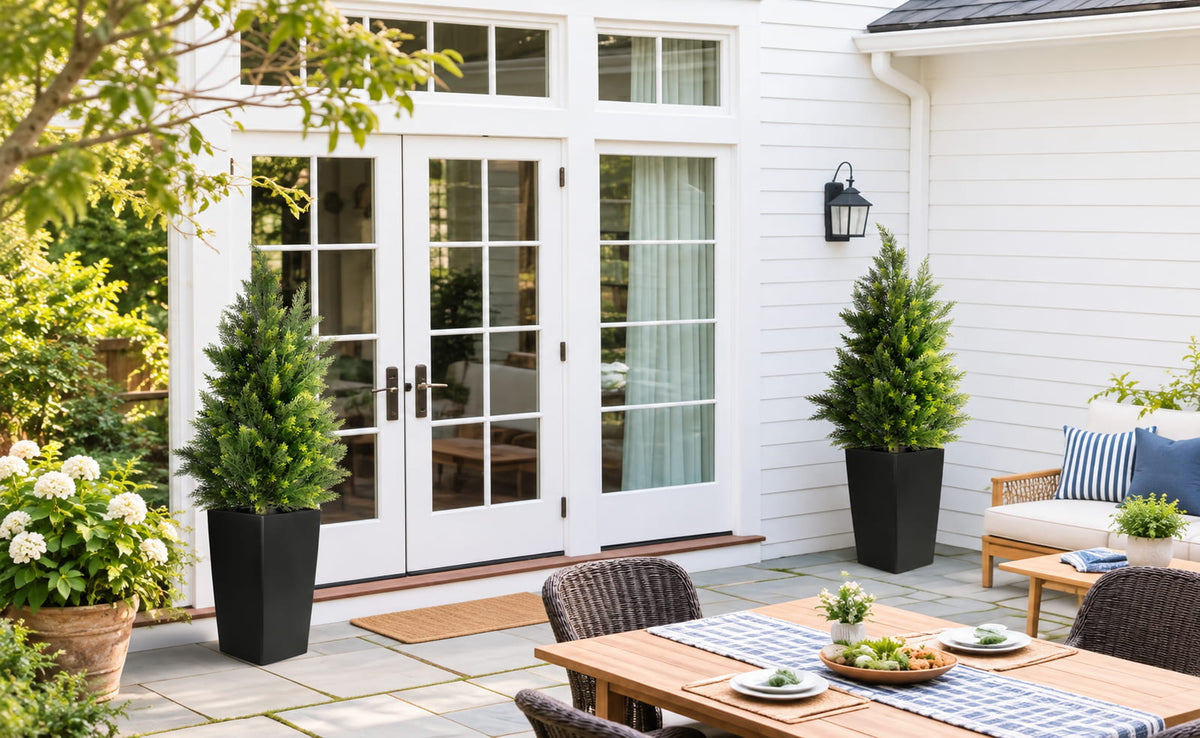
A compact artificial cedar is easier to place beside a doorway or under a covered porch.
A taller tree creates more visual impact but may need additional stability in exposed areas.
A Stable Placement
Consider how protected the area is from wind, snow, and ice.
Even a weather-resistant artificial cedar will usually benefit from a sheltered position during severe winter conditions.
Can Artificial Cedar Trees Stay Outside All Winter?
Some artificial cedar trees can remain outside throughout winter, depending on the product and the environment.
Before leaving one outdoors all season, consider:
- whether it is designed for outdoor use
- whether the location is sheltered or exposed
- how much snow and ice the area normally receives
- whether strong winter winds are common
- whether the tree is stable in its current position
A weather-resistant artificial cedar on a covered porch may need very little attention.
The same tree placed in an exposed area with repeated heavy snow, ice, and wind will experience much more stress.
That is why outdoor artificial plants still benefit from thoughtful placement and basic seasonal care.
A Little Snow Does Not Mean Your Artificial Cedar Is Ruined
Artificial cedar trees are a convenient way to keep evergreen color around an entryway, porch, or patio throughout winter.
Cold weather alone is usually not the biggest concern.
Heavy snow, ice buildup, and strong wind matter more because they place physical pressure on the branches and base.
If snow pushes your artificial cedar downward, gently remove the extra weight, allow any ice to melt, let the tree dry, and reshape the branches gradually.
And when severe winter weather is expected, a more sheltered location can help keep the tree looking natural and full throughout the season.
FAQs
Can artificial plants stay outside in winter?
Yes, many artificial plants can stay outside in winter if they are designed for outdoor use. Their durability depends on the material, placement, and exposure to snow, ice, and wind.
Can artificial plants stay outside in the snow?
Light snow is usually less concerning than heavy or wet snow. Large amounts of snow can add weight to branches and flatten the plant.
Does cold weather damage artificial plants?
Cold weather does not affect artificial plants in the same way it affects living plants, but very low temperatures may temporarily make some synthetic materials less flexible.
Does snow damage artificial cedar trees?
Snow does not automatically damage an artificial cedar tree, but heavy or wet snow can bend branches, flatten the shape, or make the tree less stable.
What should I do if snow bends my artificial tree branches?
Remove loose snow gently, let any ice melt, allow the tree to warm and dry, then reshape the larger branches gradually before adjusting smaller branch tips.
Author Bio
Artificial plant care and seasonal styling tips.



Leave a comment
This site is protected by hCaptcha and the hCaptcha Privacy Policy and Terms of Service apply.