


How to Choose and Style a Faux Cedar Tree
A faux cedar tree can bring evergreen color and structure to a space without the care of a real plant. But choosing the right one is not only about height.
Shape, width, foliage density, and placement all affect how natural an artificial cedar tree feels. A dense cedar can give a porch more presence, a narrow artificial cypress tree can fit a tight entryway, and a softer weeping cedar can settle naturally into a living room.
Start With Shape Before Choosing Height
Two artificial cedar trees can both be 4 feet tall and still create very different effects.
A dense, tapered tree feels more structured. A narrow tower silhouette adds height without taking up much floor space. A weeping cedar has softer branch lines and a more relaxed appearance.
Before choosing a size, look at what surrounds the tree. On a porch, consider the scale of the front door. In an entryway, think about walking space. In a living room, compare the tree with nearby furniture.
For Open Porches, Fuller Foliage Adds Presence

Front porches are usually viewed from farther away than indoor spaces, so overall silhouette matters more than small branch details.
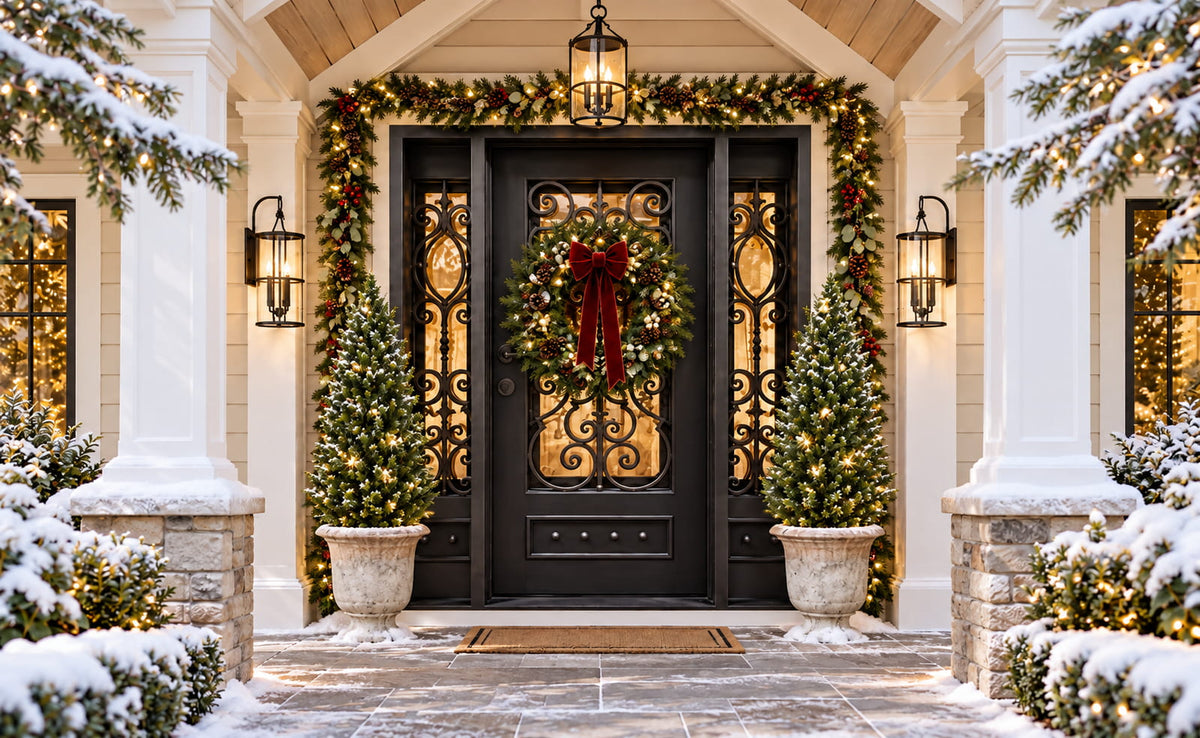
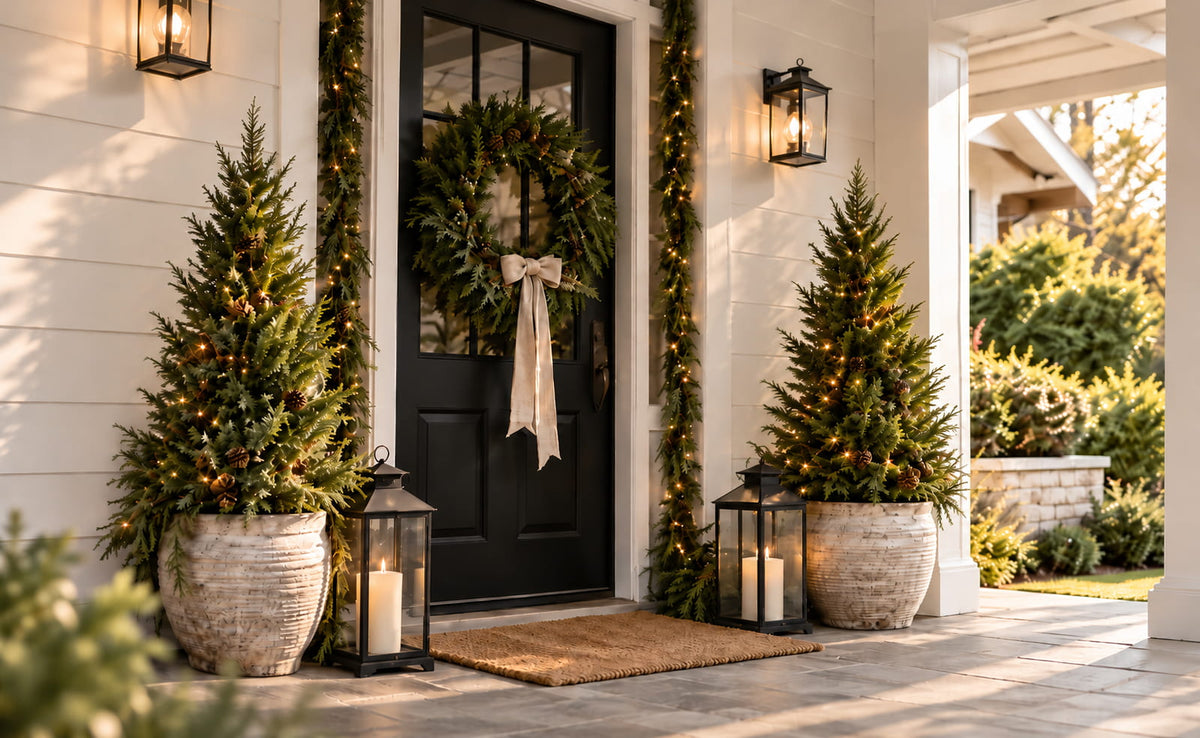
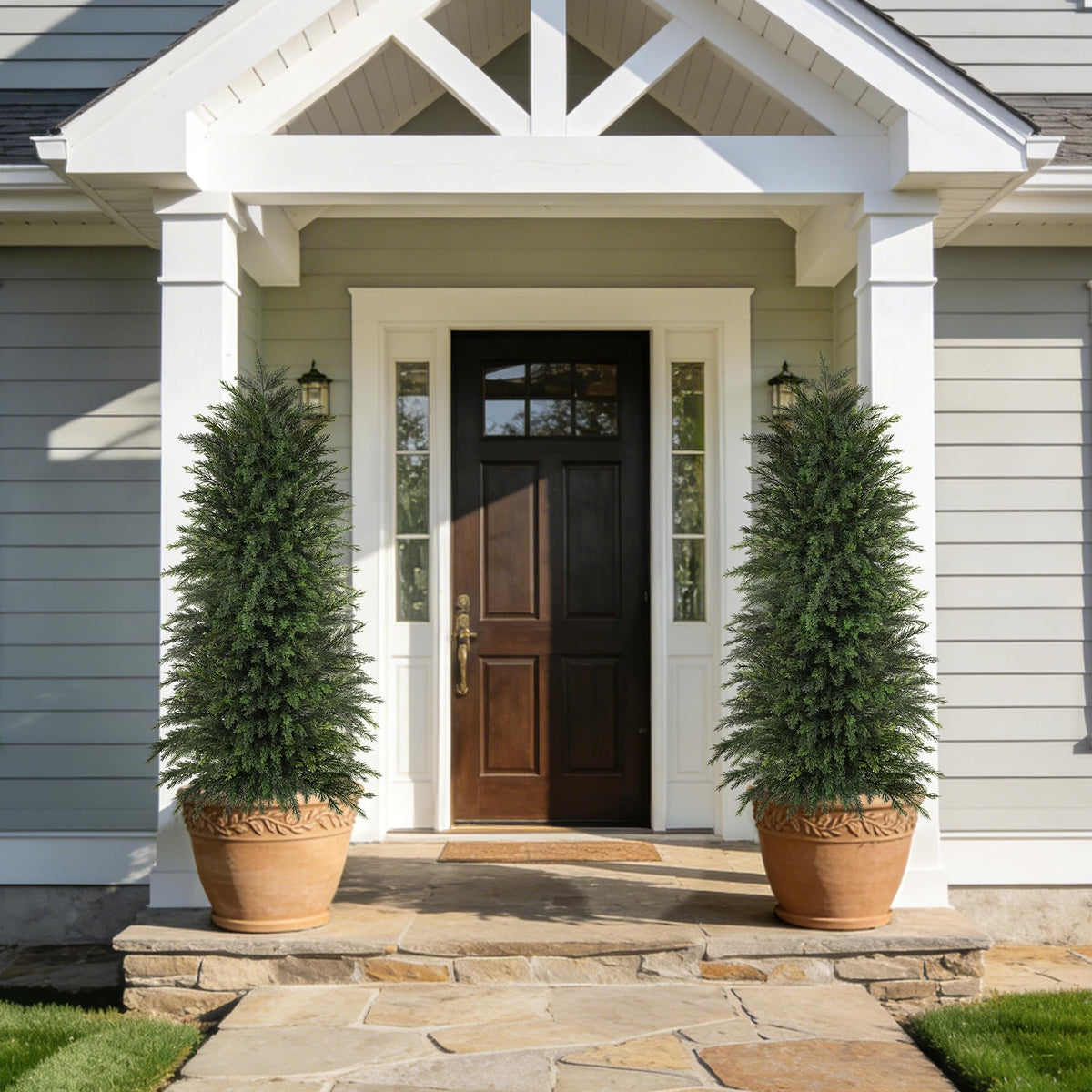
This is where a faux cedar tree for a front porch with fuller foliage can work well.
The 3'–4' Artificial Dense Cedar has a compact, tapered outline with closely layered matte PE foliage. Its fuller shape gives it enough visual weight beside a front door, porch column, or covered patio without requiring a very tall tree.
A 3' artificial cedar tree works comfortably near lower windows or smaller entrances. A 4' faux cedar tree creates more vertical presence beside a standard residential door.
For Narrow Entryways, Choose an Upright Shape
Indoor entryways often have enough height but limited floor space. A wide artificial evergreen can make a foyer feel crowded.
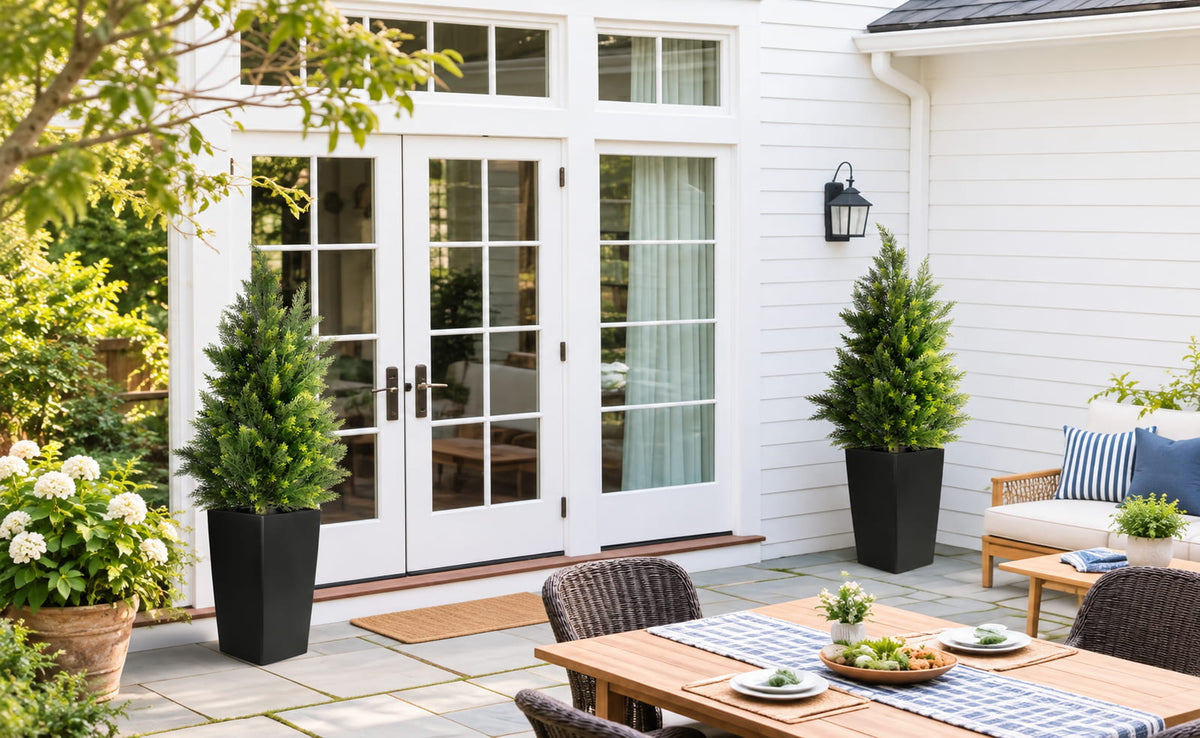
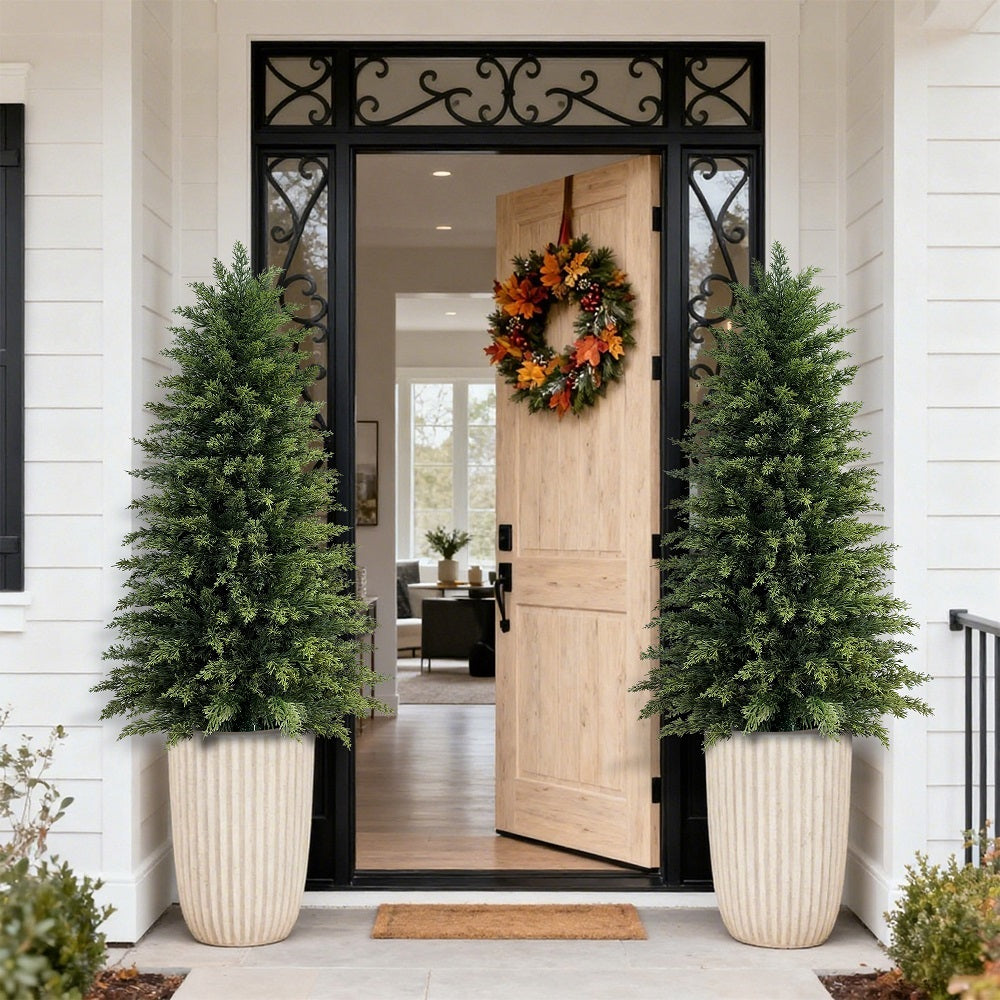
The Soft Touch Artificial Tower Cypress has a vertical silhouette that keeps much of its foliage close to the center. Available in several heights, it can work as a smaller accent or a taller floor tree while keeping a relatively slim profile.
This shape makes sense beside a narrow console, between windows, near a staircase, or in an office corner.
For an artificial cedar tree for an entryway, width can be just as important as height. The goal is vertical greenery without interrupting normal movement.
For Living Rooms, Softer Branches Feel More Natural

Living rooms already contain sofas, rugs, lamps, artwork, and textiles. A highly structured topiary can sometimes feel too formal beside these softer materials.
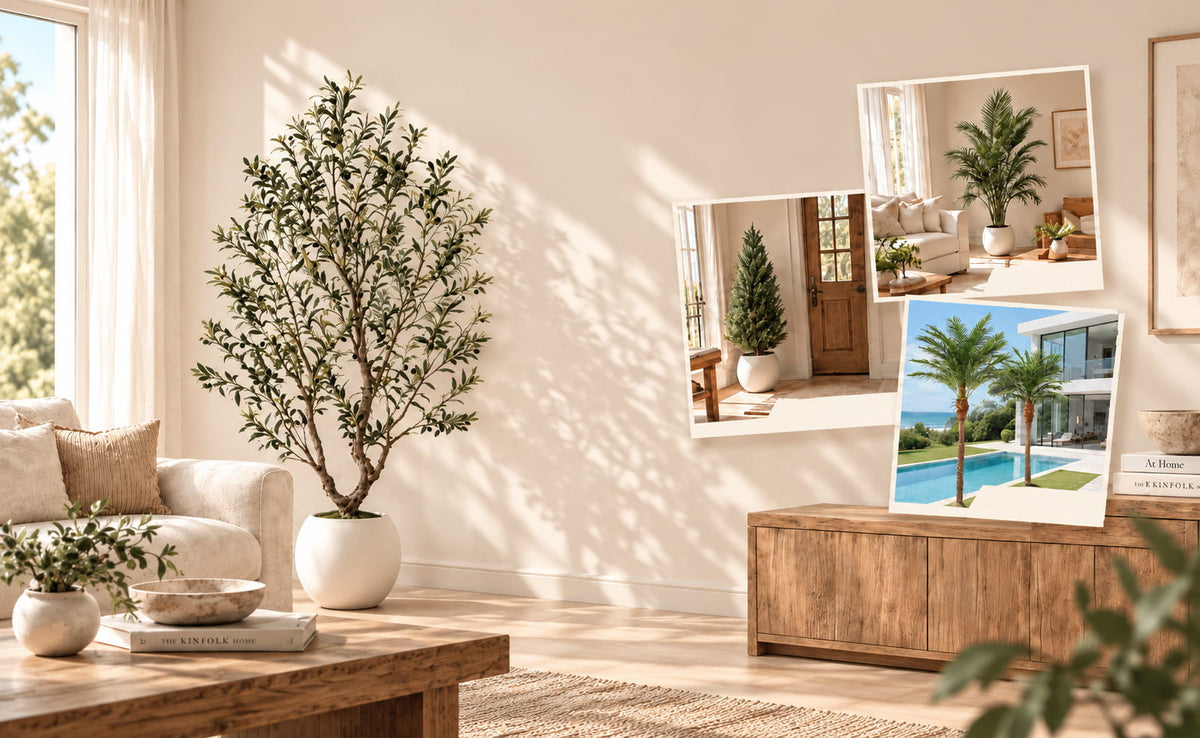
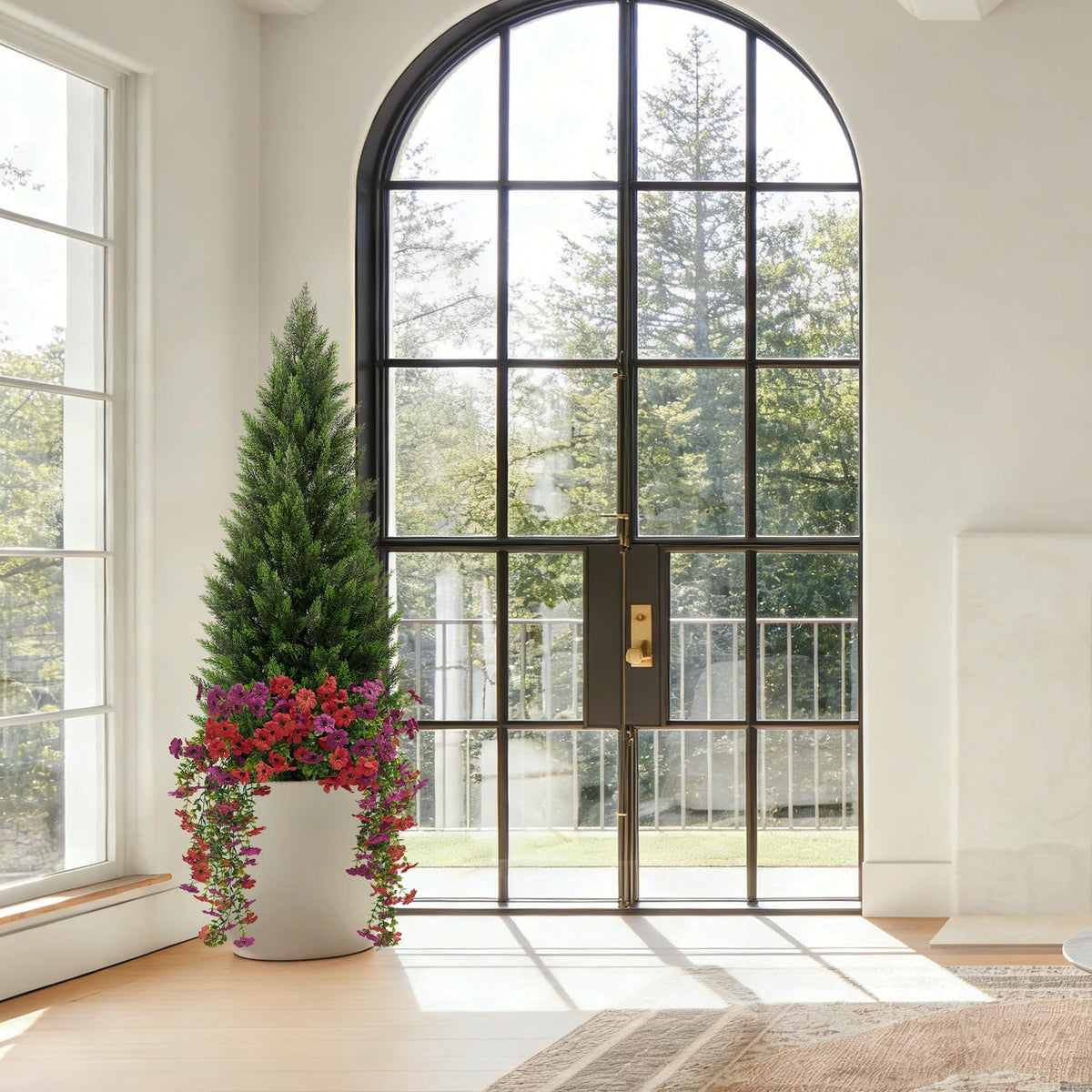
An Artificial Weeping Cedar Tree creates a more relaxed outline through layered branches and a tapered shape.
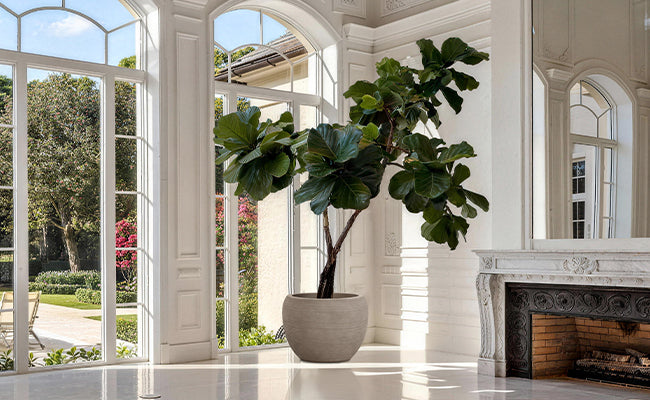
A 3'- 4' artificial cedar tree can sit near a console, bench, or low window. A 5'- 6' faux cedar tree for a living room works more like a floor tree beside a sofa, fireplace, large mirror, or open corner.
This softer shape makes the greenery easier to integrate into everyday interiors rather than making it feel like a formal outdoor topiary brought inside.
For Planters and Walkways, Smaller Can Be Better

Not every outdoor area needs a tall faux cedar tree.
A small porch, balcony, walkway, or existing planter may already have enough architectural height. In these spaces, a 2' artificial cedar tree can feel more proportional.
The 2' Artificial Weeping Cedar Tree works more like a compact evergreen shrub than a floor tree. Its scale is useful for porch containers, garden paths, balcony corners, and low landscape arrangements.
A potted version can sit inside a decorative container, while a spiked version can be positioned in soil or an existing planter.
A taller container adds visual height, while a low planter keeps the greenery closer to shrub scale. This makes a small artificial cedar tree for planters especially flexible when the container is already part of the overall design.
Think About Viewing Distance
Where people normally see the tree can help determine which shape works best.
A faux cedar tree for a porch may be viewed from several yards away, so density and silhouette become more important. Inside an entryway, people may pass within a few feet, making width, texture, and branch layering more noticeable.
This is one reason the same artificial evergreen tree may not feel equally natural in every part of a home.
Match Height to the Architecture
Instead of choosing the tallest option available, compare the tree with nearby architectural elements.
Around planters, porch railings, and walkways, a 2' faux cedar tree may provide enough greenery. Beside smaller entrances and lower windows, 3'-4' artificial cedar trees usually feel balanced.
Taller 5'- 6' artificial evergreen trees make more sense beside full-height mirrors, fireplaces, large windows, open living room corners, or tall foyers.
Leaving visible space around the foliage also helps the tree feel more natural.
Let the Space Guide the Final Choice
The right artificial cedar tree depends on what the space is missing.
An open porch may benefit from fuller foliage. A narrow entryway usually needs height without excessive width. Living rooms often feel more natural with softer branch shapes, while planters and smaller outdoor areas may only need a compact evergreen.
Look at available width, nearby furniture, planter height, viewing distance, and surrounding architecture first. Once those elements are balanced, choosing the right faux cedar tree size and shape becomes much easier.
Frequently Asked Questions
What size faux cedar tree works best for a front porch?
For many standard porches, a 3'- 4' faux cedar tree provides enough presence without overwhelming the doorway. Larger covered entrances can support taller trees.
What type of faux cedar works well in a narrow entryway?
A narrow artificial cypress tree is often easier to place because it adds height while using less floor space.
What is the difference between a dense cedar and a weeping cedar?
A dense artificial cedar tree has a fuller, more structured outline. A weeping cedar tree has softer, layered branches and generally feels more relaxed.
Can a 2' artificial cedar tree work in an outdoor planter?
Yes. A 2' artificial cedar tree works well in smaller planters, porch containers, walkways, and balcony arrangements.
What height artificial cedar tree is best for a living room?
A 5'- 6' artificial cedar tree usually works well as a floor tree. A 3'- 4' cedar is better suited to lower furniture or smaller corners.
How can I make a faux cedar tree look natural in a room?
Match the faux cedar tree size to nearby furniture, leave some open space around the foliage, and choose a planter that feels proportional to the tree.
Author: Vitalismo
About: Vitalismo creates realistic artificial plants and faux trees designed for North American homes, with a focus on natural details, practical styling, and versatile indoor and outdoor greenery.
About: Vitalismo creates realistic artificial plants and faux trees designed for North American homes, with a focus on natural details, practical styling, and versatile indoor and outdoor greenery.

Leave a comment
This site is protected by hCaptcha and the hCaptcha Privacy Policy and Terms of Service apply.