






How to Dust Fake Flowers and Silk Flowers Safely
Artificial flowers bring lasting color and beauty to your home, but dust can gradually collect on petals, leaves, and delicate stems. Knowing how to dust fake flowers correctly helps keep your arrangements looking presentable without unnecessary washing or damage.
The best cleaning method depends on the flower's material, construction, and condition. Most artificial flowers can start with gentle dry dusting, while silk-style flowers may require extra care to protect their fabric petals, colors, and decorative finishes.
At Vitalismo, we believe artificial greenery and decorative foliage should be easy to enjoy and maintain. In this guide, you'll learn how to dust fake flowers, clean silk flowers safely, choose the right tools, and avoid common cleaning mistakes.
Quick Answer: How Do You Dust Fake Flowers?
For routine dust removal, start with a clean feather duster, soft-bristled brush, or dry microfiber cloth. Gently clean the petals and leaves, paying attention to the areas between overlapping petals and around the centers of flowers.
For delicate silk-style or fabric flowers, use minimal pressure and avoid aggressive rubbing. Before using water, cleaning sprays, or a hair dryer, check the manufacturer's care instructions.
The safest rule is to start with gentle dry cleaning and use a more intensive method only when the specific flower can tolerate it.
How to Dust Fake Flowers: A Step-by-Step Guide
Regular, gentle dusting is usually easier than removing a heavy layer of accumulated dust. Follow these steps to clean most artificial flower arrangements without unnecessary handling.
Step 1: Prepare Your Cleaning Tools
Choose tools that can remove dust without scratching surfaces or pulling at delicate petals.
Useful options include:
-
A clean feather duster for loose surface dust
-
A soft-bristled brush for flower centers and narrow spaces
-
A dry microfiber cloth for suitable leaves and smooth surfaces
-
A handheld vacuum with a soft attachment and low suction, if the flower's construction allows it
Avoid stiff brushes, abrasive sponges, and rough cloths. If you're unsure how a flower will respond, test your chosen tool on a small, inconspicuous area first.
Step 2: Remove Loose Dust Gently
Hold the arrangement securely by its vase or sturdy stem. Lightly sweep a feather duster or soft brush over the petals and leaves.

Work from the top of the arrangement downward, supporting delicate flower heads with your free hand when needed. Avoid pulling individual petals or pressing hard against the foliage.
For large arrangements, clean one section at a time so you can reach the inner leaves and stems without disturbing the entire display.
Step 3: Clean Between Petals and Leaves
Dust can accumulate where petals overlap, around the center of a flower, and at the joints between leaves and stems.
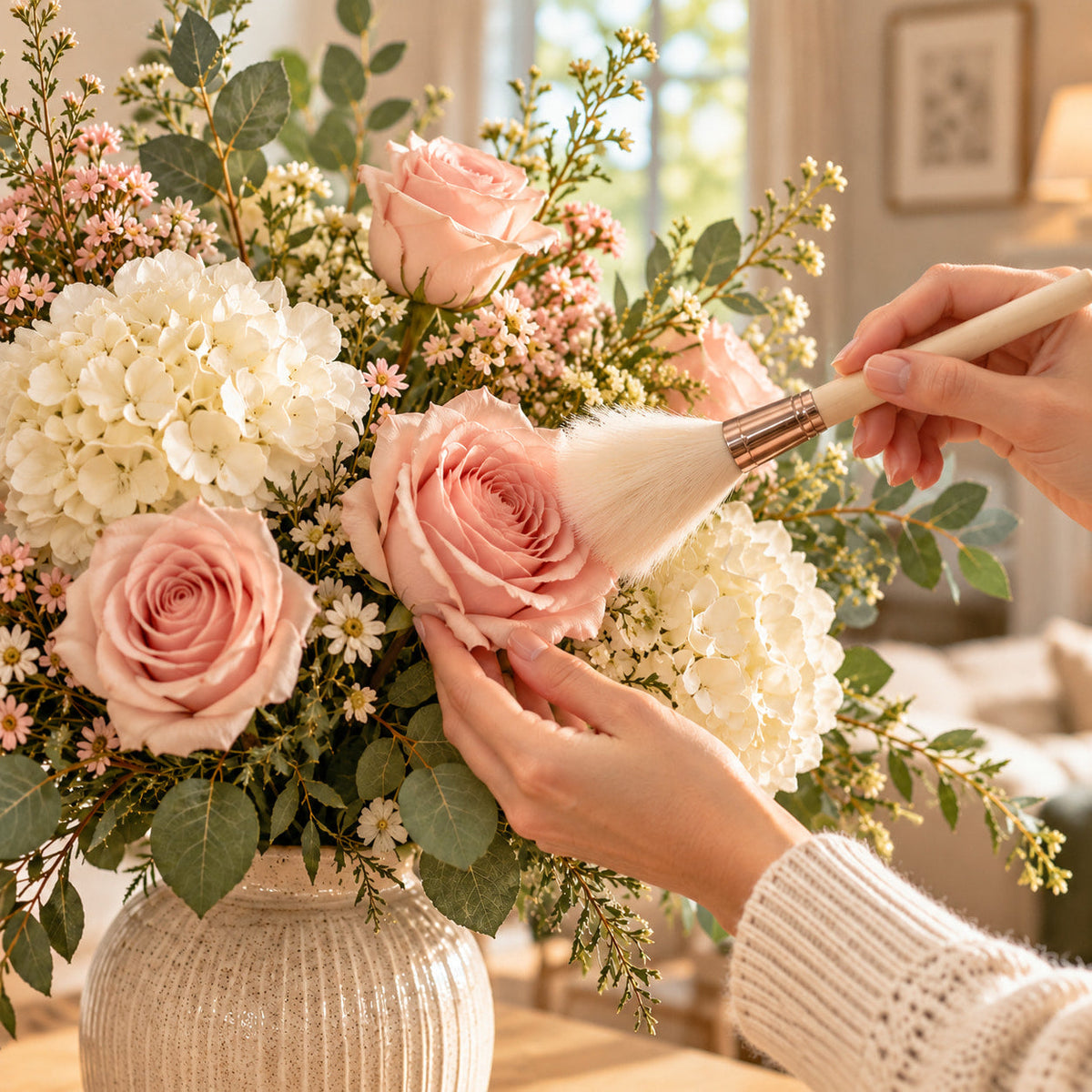
Use a small, soft-bristled brush to reach these areas. Move gently and avoid forcing the brush into narrow gaps.
For densely arranged artificial flowers, a careful, section-by-section approach can help remove dust without bending the stems or loosening attached components.
Step 4: Inspect the Arrangement
After dusting, check the flowers under normal indoor lighting. Look for remaining dust around the flower centers, beneath leaves, and between overlapping petals.
Use a dry microfiber cloth on suitable surfaces or repeat the gentle brushing process where needed.
If the flowers still appear dirty after dry dusting, identify their material and check the care instructions before attempting wet cleaning.
How to Dust Silk Flowers Without Damaging Them
Silk-style artificial flowers often feature fabric petals, dyed surfaces, or glued decorative components. Despite the common name, many products marketed as silk flowers use polyester or other synthetic fabrics rather than natural silk.
This distinction matters because different materials and finishes can respond differently to moisture, friction, and cleaning products.
1. Start with a Feather Duster
For light dust, gently sweep a clean feather duster over the petals and leaves.
Use minimal pressure around thin petal edges and layered flower heads. If a petal bends easily, support it while cleaning instead of pulling it into position.
2. Use a Soft Brush for Detailed Areas
A clean, soft-bristled brush can help remove dust from the center of a flower and between overlapping petals.
Brush lightly rather than scrubbing. Stop if the fabric begins to fray, the color transfers, or the petals lose their shape.
3. Use a Microfiber Cloth Carefully

A dry microfiber cloth can be useful on sturdy leaves and smooth surfaces.
Avoid repeatedly rubbing delicate fabric petals. Some materials can snag, flatten, or change appearance when handled too aggressively.
4. Be Cautious with Water and Cleaning Sprays
Do not assume that silk-style flowers can be washed simply because their petals look like fabric.
Moisture may affect dyes, coatings, glued components, or the shape of the petals. Only use a damp cloth, cleaning spray, or washing method when the product's care instructions permit it.
If wet cleaning is approved, test an inconspicuous area first and allow the flowers to dry completely before returning them to their display.
Best Cleaning Methods for Different Artificial Flower Materials
Different materials require different levels of care. Use this comparison as a starting point, not as a substitute for the manufacturer's instructions.
| Flower material or construction | Recommended starting method | What to watch for |
|---|---|---|
| Plastic artificial flowers | Soft brush or dry microfiber cloth | Check whether wet cleaning is permitted |
| Silk-style or fabric flowers | Feather duster or gentle dry brushing | Avoid excessive friction and unapproved moisture |
| Flowers with delicate coatings | Gentle dusting with a soft tool | Avoid unapproved solvents or abrasive cleaners |
| Dense artificial arrangements | Clean one section at a time with a soft brush | Avoid pulling petals or forcing tools between tightly packed flowers |
The flower's dyes, surface finishes, adhesives, and internal structure can affect which cleaning methods are appropriate. When in doubt, begin with the least invasive option: gentle dry dusting.
Can You Use a Hair Dryer to Remove Dust from Fake Flowers?
A hair dryer may help remove loose dust from some artificial flowers, but it should not be the first choice for every arrangement.
If the manufacturer permits it, use a cool setting with gentle airflow from a distance. Test a small, inconspicuous area before proceeding.
Avoid hot air, which may deform certain plastics, affect adhesives, or damage delicate finishes. Strong airflow can also bend lightweight petals or dislodge small decorative components.
For delicate silk-style flowers, a soft brush or feather duster is generally a more controlled starting point.
Can You Wash Artificial Flowers with Water?
Some artificial flowers can tolerate damp cleaning, while others should only be dry-dusted. The correct method depends on the materials and construction.
Before using water, check four things:
-
Material: Plastic, polyester fabric, and specialty-coated petals may have different cleaning requirements.
-
Color and finish: Dyes and surface coatings may not tolerate moisture or cleaning products.
-
Construction: Glued petals, wired stems, and attached decorations may be vulnerable to soaking.
-
Care instructions: The manufacturer's recommendations should determine whether wet cleaning is appropriate.
If damp cleaning is permitted, follow the recommended method and avoid soaking the entire arrangement unless the manufacturer specifically confirms that it is safe.
Allow the flowers to dry completely before returning them to a vase or enclosed display.
Common Mistakes to Avoid When Dusting Artificial Flowers
A few common cleaning mistakes can affect the appearance of artificial flowers.
Scrubbing Too Hard
Excessive friction can distort petals, damage fabric surfaces, or loosen attached components. Use light pressure and support delicate parts while cleaning.
Using Hot Air
High temperatures may affect certain plastics, adhesives, and surface finishes. Do not use hot air unless the manufacturer explicitly permits it.
Applying Unapproved Cleaning Chemicals
Bleach, strong solvents, and abrasive household cleaners may damage colors and coatings. Check the product's care guidance before applying any cleaning solution.
Washing Every Artificial Flower the Same Way
A method suitable for a sturdy plastic flower may be inappropriate for a delicate fabric arrangement. Identify the material before choosing a cleaning method.
Ignoring Hidden Dust
Dust can collect between petals, beneath leaves, and around the centers of densely arranged flowers. Clean these areas gently instead of concentrating only on the most visible surfaces.
How Often Should You Dust Artificial Flowers?
There is no single cleaning schedule that works for every home.
Artificial flowers displayed near open windows, in busy rooms, or in areas where dust accumulates quickly may need more frequent attention. Arrangements kept in enclosed displays or relatively clean spaces may need less.
Inspect your flowers periodically and dust them when you notice visible buildup. Gentle maintenance can make cleaning easier than waiting until dust becomes heavily accumulated in intricate petals or foliage.
Artificial Greenery Care from Vitalismo

At Vitalismo, we believe artificial greenery should be easy to enjoy and maintain. Caring for faux plants, evergreen garlands, and decorative foliage starts with understanding the material and following the appropriate care instructions.
For routine maintenance, begin with gentle dust removal. Before using water, cleaning sprays, or other cleaning tools, confirm that the specific product can tolerate the method.
These simple habits can help you maintain the appearance of artificial greenery while reducing unnecessary handling and wear.
For additional material-specific guidance, consult the care instructions supplied with your artificial flowers. You can also review these general resources:
These resources illustrate why cleaning methods should be selected according to the product rather than applied universally.
Frequently Asked Questions
How do you dust fake flowers quickly?
Use a clean feather duster or soft brush to remove loose dust from petals and leaves. Work gently from the top of the arrangement downward, then use a dry microfiber cloth on suitable surfaces if needed.
How do you dust silk flowers without damaging the petals?
Start with gentle dry dusting using a feather duster or soft-bristled brush. Avoid pulling, scrubbing, or applying water unless the manufacturer's care instructions permit it.
Can you use a hair dryer to clean artificial flowers?
Some artificial flowers can tolerate cool, gentle airflow, but this depends on their materials and construction. Follow the manufacturer's guidance, keep the dryer at a distance, and avoid hot air.
Can you clean artificial flowers with a damp cloth?
Some artificial flowers can tolerate damp cleaning, while others may be damaged by moisture. Check the material and care instructions, and test an inconspicuous area before cleaning a larger surface.
How do you remove dust from the center of artificial flowers?
Use a small, soft-bristled brush to gently lift dust from the center and between overlapping petals. Avoid forcing the brush into narrow spaces or pulling on delicate components.
How often should you clean fake flowers?
Clean them when you notice visible dust buildup. Arrangements displayed in dustier environments may need more frequent attention than flowers kept in enclosed or relatively clean spaces.
What should you avoid when cleaning silk-style flowers?
Avoid aggressive scrubbing, excessive moisture, hot air, and unapproved cleaning chemicals. These may affect fabric fibers, dyes, coatings, or glued components.
Final Thoughts
The best way to dust fake flowers is to start gently, choose tools suited to the material, and avoid unnecessary washing.
For plastic artificial flowers, a soft brush or microfiber cloth may be sufficient for routine care. For silk-style and other fabric flowers, gentle dry dusting is a sensible starting point, with additional cleaning only when the product's care instructions allow it.
At Vitalismo, we encourage thoughtful care of artificial greenery and decorative foliage so you can continue enjoying your arrangements as part of your home decor.
Author: Vitalismo Editorial Team
Author Bio: The Vitalismo Editorial Team shares tips on artificial greenery, home decor, and seasonal styling.



Leave a comment
This site is protected by hCaptcha and the hCaptcha Privacy Policy and Terms of Service apply.