



How to Make Artificial Plants Look Real: Expert Tips for a Natural Home
Artificial plants have become an essential element in modern home decor, offering a simple way to introduce greenery, texture, and warmth into interior spaces. Unlike real plants, high-quality faux greenery does not require watering, sunlight, pruning, or seasonal maintenance, making it an ideal choice for busy homeowners, apartment residents, and anyone looking for long-lasting home decoration.
However, many people still ask the same question before purchasing:
Do artificial plants really look real?
The answer depends on the quality of the plant and how it is styled. A realistic artificial plant is not defined by simply having green leaves. It is created by carefully recreating the natural structure, texture, color variation, and growth patterns of a living plant.
When selected and placed correctly, modern artificial plants can create the same visual comfort and natural atmosphere as real greenery while providing a more convenient solution for everyday living.

What Makes an Artificial Plant Look Real?
The realism of an artificial plant comes from several important design elements: natural shape, realistic materials, proper proportions, and thoughtful placement.
Low-quality faux plants often look artificial because they have:
- Perfectly symmetrical shapes
- Identical leaves
- Bright plastic-like colors
- Unrealistic branch structures
- Incorrect proportions for the space
In contrast, realistic artificial plants are inspired by nature. They include organic details that mimic how real plants grow, creating a more natural appearance that blends with modern interiors.
Choose Artificial Plants With Natural Shapes and Structure
One of the most important factors in creating a realistic look is the plant’s overall structure.
In nature, plants are never perfectly arranged. Branches extend in different directions, leaves grow at different angles, and the canopy develops with natural variation.
When choosing realistic faux plants, look for:
- Organic branch movement
- Layered foliage with depth
- Natural spacing between leaves
- Balanced but imperfect silhouettes
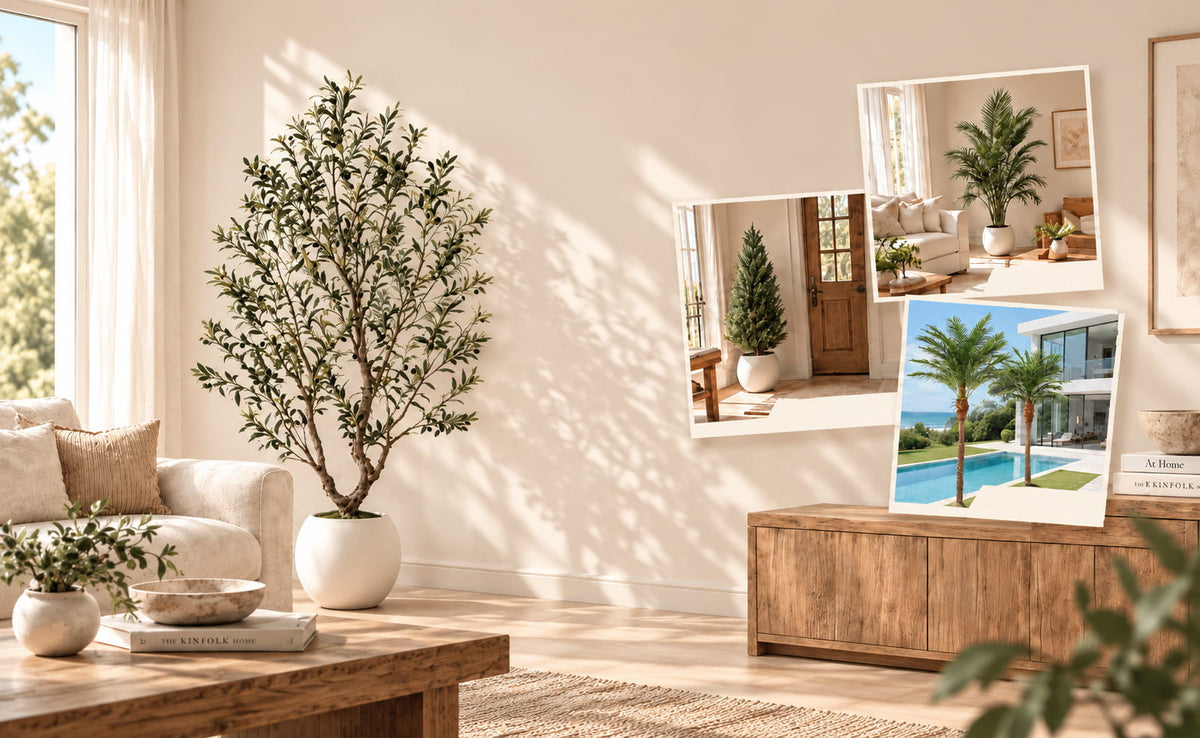
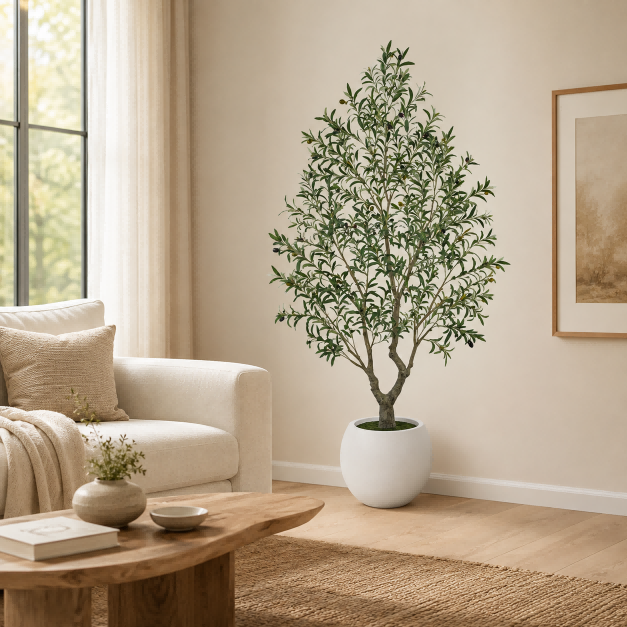
For example, a realistic artificial olive tree should not look like a perfectly trimmed green sphere. Real olive trees are known for their elegant branching patterns, open canopy structure, and Mediterranean-inspired shape.
A well-designed faux olive tree with a natural trunk structure, realistic branches, and varied foliage creates the feeling of a living tree while maintaining the convenience of artificial greenery.
Pay Attention to Leaf Color, Texture, and Material Quality
Color and texture play a major role in determining whether artificial plants feel natural.

Many inexpensive faux plants appear unrealistic because every leaf has the same bright green tone and a shiny plastic surface. Real plants contain subtle differences in color, finish, and texture.
High-quality artificial plants often feature:
- Multiple shades of green
- Natural color variation
- Matte leaf surfaces
- Detailed leaf shapes
- Soft realistic textures
For example, olive trees naturally have muted green and gray-green leaves rather than a single intense green color. These subtle tones allow artificial olive trees to pair beautifully with modern interiors featuring cream fabrics, natural wood, linen textures, and neutral color palettes.
The goal is not to make artificial plants look perfect. The goal is to make them look natural.
Select the Right Size and Proportion for Your Home
Even the most realistic artificial plant can look unnatural if the size does not match the room.
Interior designers often use plants to create balance, height, and visual interest. Choosing the right scale helps greenery feel like a natural part of the space.
For example:
A tall artificial tree works well in:
- Living room corners
- Open entryways
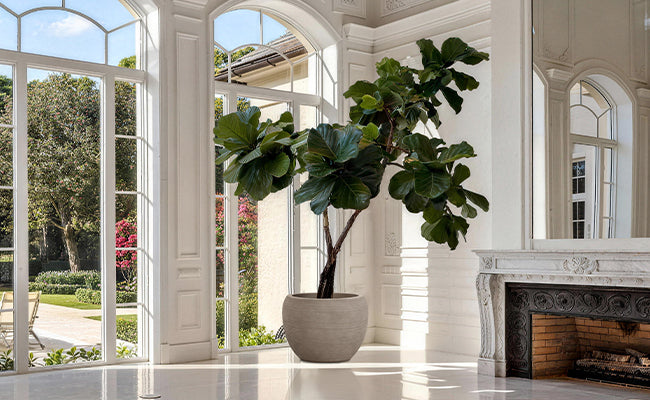
- Spaces beside sofas or fireplaces
A slim-profile artificial plant is ideal for:
- Apartments
- Narrow hallways
- Areas near walls
- Smaller rooms
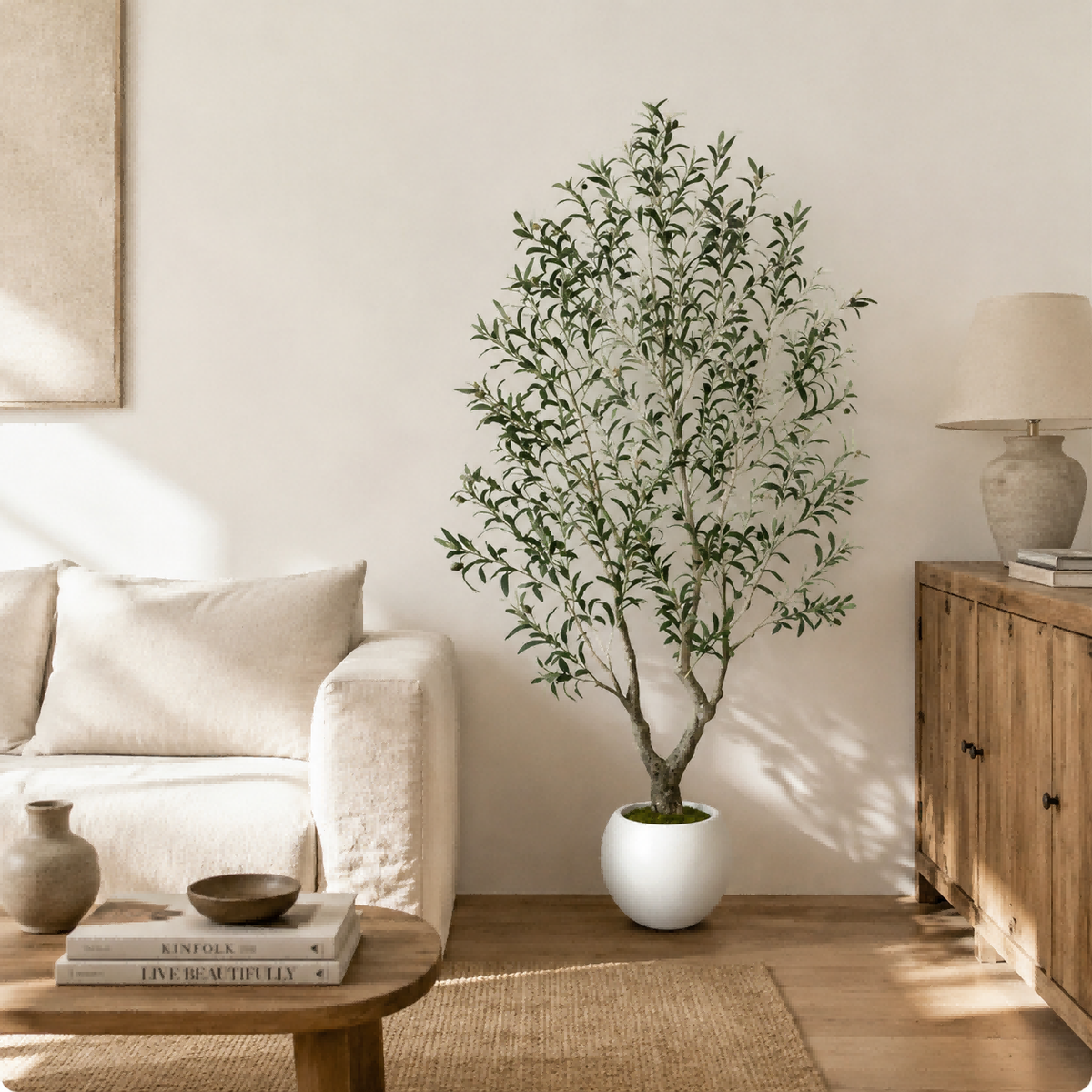
This is why wall-friendly faux olive trees have become popular in modern homes. Their full front appearance provides the visual impact of a large tree, while the slim side profile allows them to fit naturally beside furniture and walls without overwhelming the space.
Style Artificial Plants Like Real Plants
Placement is one of the easiest ways to make artificial plants look more realistic.

A common mistake is placing faux greenery randomly without considering how real plants would naturally exist in a home. Instead, treat artificial plants as part of the overall interior design.
In a living room, a tall artificial plant beside a sofa, accent chair, or empty corner can create a natural focal point.
In a bedroom, greenery placed near a dresser, reading chair, or window area can add softness and create a more relaxing atmosphere.
In an entryway, an artificial tree beside a console table or mirror can make the entrance feel warmer and more welcoming.
The most realistic spaces do not make plants look like decorations. They make plants feel like they belong.
Combine Faux Greenery With Natural Interior Materials
Artificial plants look most realistic when they are surrounded by natural materials.
Modern interior styles such as organic modern design often combine greenery with:
- Natural wood furniture
- Linen fabrics
- Ceramic planters
- Stone surfaces
- Woven textures
These materials create visual harmony and help faux greenery blend naturally into the room.
For example, an artificial olive tree placed beside a cream sofa, wooden furniture, and neutral textiles can create a warm Mediterranean-inspired atmosphere that feels timeless and sophisticated.
The plant becomes part of the lifestyle, not just an accessory.
Why Artificial Olive Trees Are a Popular Choice for Modern Homes
Among artificial trees, olive trees have become one of the most popular choices for contemporary interiors.
Their popularity comes from several design advantages:
- Elegant natural branching
- Soft green foliage
- Mediterranean-inspired appearance
- Ability to complement different interior styles
- Suitable for apartments and larger homes
A realistic artificial olive tree works especially well in modern organic interiors because its natural shape adds height and texture without making the space feel crowded.
For homes with limited floor space, a wall-friendly olive tree design provides a practical solution by offering a full appearance from the front while maintaining a narrow profile.
Keep Artificial Plants Clean and Naturally Styled

Although artificial plants require much less maintenance than real plants, occasional care helps preserve their realistic appearance.
Simple maintenance includes:
- Removing dust from leaves regularly
- Adjusting branches occasionally
- Keeping planters clean
- Avoiding overcrowding multiple plants in one area
Small adjustments can make artificial greenery continue looking fresh and natural for years.
Frequently Asked Questions About Realistic Artificial Plants
Do artificial plants look real?
Yes. High-quality artificial plants can look extremely realistic when they feature natural shapes, realistic materials, varied colors, and proper styling. The realism depends more on craftsmanship and placement than simply the type of plant.
How can I make fake plants look less fake?
Choose artificial plants with organic shapes, realistic leaf colors, and natural textures. Styling them with real interior materials such as wood, linen, ceramic, and stone can also make them feel more authentic.
Are artificial plants worth buying?
For homeowners who want greenery without regular maintenance, realistic artificial plants are a practical and long-lasting choice. They provide year-round beauty without concerns about watering, sunlight, or seasonal changes.
Author: Vitalismo Interior Design Team
Vitalismo creates realistic artificial plants inspired by natural botanical structures, helping modern homes achieve timeless greenery with minimal maintenance.
About Vitalismo
From realistic olive trees to seasonal botanical designs, Vitalismo focuses on combining natural aesthetics, thoughtful craftsmanship, and modern interior styling to bring beautiful greenery into everyday spaces.


Leave a comment
This site is protected by hCaptcha and the hCaptcha Privacy Policy and Terms of Service apply.